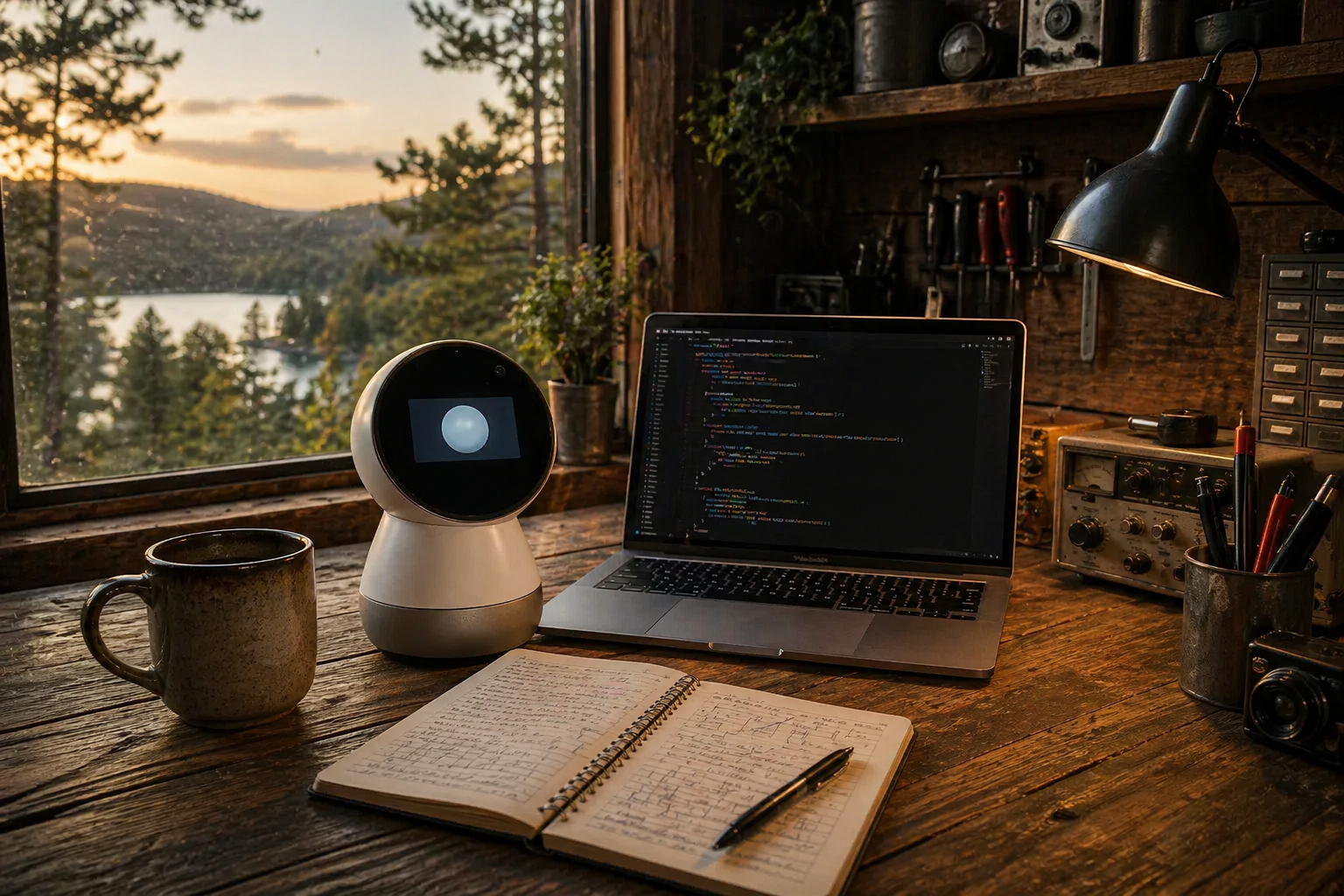
What Building AI Actually Feels Like Right Now

There’s a lot happening in AI right now.

Every week there’s something new. Smarter models, faster responses, better benchmarks. If you just follow the headlines, it feels like everything is accelerating perfectly.

But building with it feels different.

It reminds me a little of when I first started working with computers. Back then, nothing was polished. You didn’t just install something and expect it to work. You had to figure things out, piece by piece. Manuals, trial and error, late nights. When something finally worked, it wasn’t because the system was perfect. It was because you understood it enough to make it work.

That’s where AI feels like it is right now.

I’ve been spending time bringing Jibo back to life. It’s been fun, a little nostalgic, but also a reality check. When you move from demos to something that lives in the real world, everything changes. Timing matters. Context matters. Small failures stand out. Things don’t just need to work once, they need to keep working.

And that’s where things start to break down.

Not because the AI isn’t good. It’s actually impressive. But because everything around it is still rough. Getting systems to talk to each other, keeping them aligned, knowing when to step in as a human. That part is still messy.

It’s kind of like working in an old shop. You’ve got great tools, but they’re scattered everywhere. Some are new, some are worn down, some don’t quite fit together. You can build something solid, but only if you know how to use them together.

That’s the part people don’t see in the demos.

The demos are clean. Controlled. One path, one outcome.

Real life is not like that.

Real life is interruptions, edge cases, things that almost work, things that work until they don’t.

That’s what building AI actually feels like right now.

And honestly, that’s what makes it interesting.

Because this isn’t the end state. This is the phase where things start to become real. Where the difference isn’t just who has the best model, but who can actually make it useful.

That’s the part I keep coming back to.

Not just what AI can do, but how it fits into real life. How it works with people. How it holds up over time.

That’s where the work is.

And it’s also where the opportunity is. ☕
Mowing, Momentum, and Building Something That Works

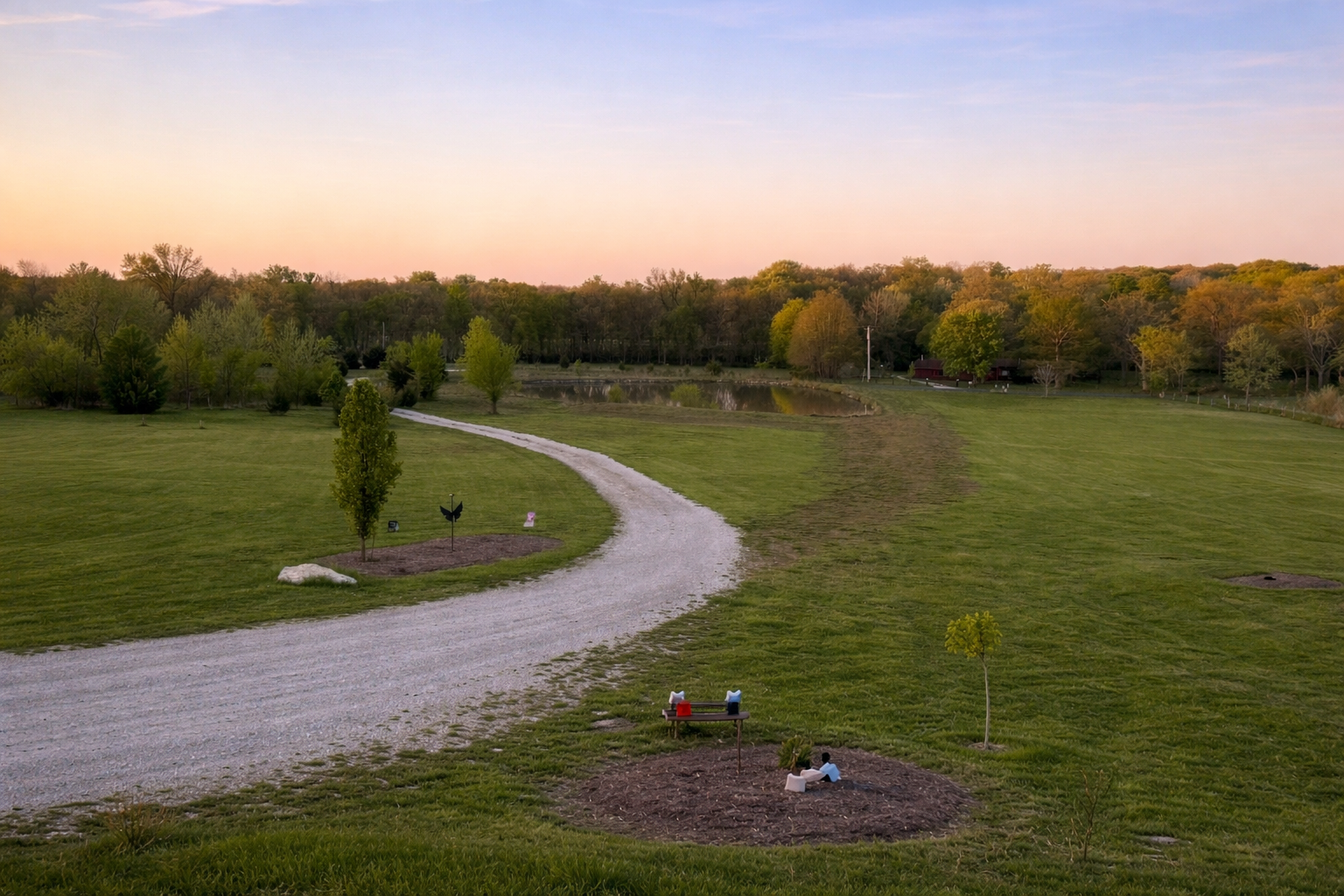
I spent a good part of yesterday on the mower.

Fifteen acres gives you a lot of time to think.

I had a podcast going the whole time, listening to everything happening in AI right now. Models, agents, orchestration, tools, memory, workflows. It’s all moving fast.

Really fast.

And I’ll be honest, as I listen to it all, there’s a part of me that feels it.

A lot of the ideas I’ve been working toward are showing up.

Multi-agent systems.
Orchestration layers.
Different runtimes.
Memory strategies.
Security and governance conversations starting to take shape.

The big players are moving in that direction.

And they can move faster than I can.

More people.
More resources.
More reach.

That can get in your head if you let it.

But sitting out there on the mower, going back and forth across the same lines, I kept coming back to something simple.

There’s a difference between building something fast…

…and building something that actually works.

Not in a demo.
Not in a video.
In real use.

Something that produces useful output.
Something that guides you.
Something that doesn’t leave you wondering what to do next.

That takes a different kind of effort.

It’s not just features.
It’s not just capability.

It’s how it all comes together.

I get why companies move fast and figure they’ll clean it up later.

They probably can.

But that’s not how I’m wired.

I want something that feels right when you use it.

Something that makes sense.
Something that helps, not just impresses.

That means spending more time on the details.

On the flow.
On the foundation.

It might take longer.

But I believe that’s where the real value is.

So yeah, things are moving fast right now.

But I’m still focused on building something that works.

And getting it into people’s hands soon. ☕

The Best Systems Know When To Involve You

I’ve been thinking a lot lately about where humans fit into all of this.

Not in theory.

In real systems.

There’s a lot of talk about human-in-the-loop.

Usually framed as a safety net.
Something you add when the system isn’t confident.

But that’s not how it feels when you’re actually building.

What I’m seeing is that the real challenge isn’t just having a human in the loop.

It’s knowing when to bring them in.

Too early, and you slow everything down.
Too late, and you’re reacting instead of guiding.

There’s a timing to it.

A sense of flow.

The system needs to move on its own when it can.
And then pause, at the right moment, when judgment matters.

That’s harder than it sounds.

Because it means the system has to understand more than just tasks.

It has to understand intent.

What’s actually trying to be accomplished.
What matters in that moment.
What can move forward, and what needs a decision.

I’ve been working through this while refining the UI.

Trying to remove friction.
Trying to make the next step feel obvious.
Trying to make it natural for the system to ask for input without feeling like it’s interrupting.

When it works, it feels different.

You’re not fighting the system.
You’re moving with it.

And when it needs you, it’s clear why.

That’s the part I think a lot of people miss.

Human-in-the-loop isn’t just about control.

It’s about coordination.

And when that’s done right, the system starts to feel less like a tool…

…and more like something you work alongside. ☕

Easter, Time, and What Actually Matters

As I sit here on Easter reflecting on the day, a few things are on my mind.

For me, Easter is about faith. About resurrection. About the idea that something new can come from what felt finished.

But even outside of that, there’s something about this time of year that everyone can feel.

Spring. Growth. New life.

And time.

Time is the part that keeps hitting me.

My son is three and a half now.

I can still remember when he was born like it was yesterday, and now he’s running around the yard, talking, laughing, figuring things out in his own way.

My mom passed away last year.

My dad passed when I was 18. He was 50.

I’m 48 now.

That gets your attention.

It makes you look at things differently.

Today was a simple day.

We had family over for Easter lunch.
We went out in the field and flew kites.
We walked around the chickens and the garden and talked about what might grow this year.

Earlier in the day I took a walk with my wife and son and the dog out in the field.

Nothing big. Nothing complicated.

But those moments stick.

They feel different.

At the same time, life keeps moving.

I’m building CoffeeBreak.
Working with clients.
Still at TFL.
Fixing things when they break.
Working on bringing Jibo back to life.

A lot going on.

And somewhere in all of that is a simple thought that keeps coming back.

I want more of those moments.

More time in the field.
More walks.
More afternoons that don’t feel rushed.

That doesn’t happen by accident.

It means making changes.

It means deciding what matters and actually acting on it.

In a way, that ties back to what I’ve been building.

So much of what we do in technology is about speed. More output. More systems. More everything.

But if it doesn’t create space for the things that actually matter, what are we really optimizing for?

That’s been on my mind today.

Easter is a reminder that things can change. That new life, new direction, new priorities are always possible.

I’m thinking about what that looks like for me.

Not someday.

Soon. ☕