Growth Happens Before You Feel Ready

This weekend felt like one of those moments where you realize life is changing while you’re still trying to keep up with it.

My son suddenly wants to help with everything outside. Not just ride along on the mower for fun, but actually help mow the property, do weed eating, and be part of the work. We spent part of the weekend working on the land together and somewhere along the way it hit me that he’s growing. He’s starting to become capable.

That sneaks up on you.

We also spent time planting flowers, working around the property, and dealing with spring projects. I hatched a few more chicks this week too. Some made it, some didn’t. That’s just part of raising animals and living a little closer to nature. Things grow, things fail, and you keep moving forward.

Mother’s Day was good too. Family time, good weather, slowing things down for a minute. Watching everything my wife does for our family always reminds me how much growth happens quietly in the background while everyone else is focused on bigger, louder things.

At the same time, the technology world feels like it’s changing faster than ever.

Every week there’s another AI announcement, another new model, another prediction about how everything is about to change. Some of it is hype, but some of it is real. You can feel the shift happening underneath everything now.

That’s part of why I’ve been so focused lately.

CoffeeBreak is evolving quickly. My thinking around orchestration, memory, smaller expert systems, and long-term AI behavior is changing almost weekly right now. Jibo keeps improving little by little too. New versions, new features, more personality starting to come back into the system.

It feels like a lot of things are growing at once.

Some of it is exciting.
Some of it is uncertain.
Most of it is happening faster than expected.

I think that’s just life sometimes.

You make plans, and then growth changes the shape of them.

Your kids grow.
Technology changes.
Your priorities shift.
New opportunities appear before you feel fully prepared for them.

And somewhere in the middle of all of it, you realize the future isn’t some distant thing anymore.

It’s already showing up around you in small ways every day.

The trick is noticing it while it’s happening.

Working Through It

Lately I’ve been focused on making progress.

Not the kind you see in demos or announcements. The kind where you’re just trying to move things forward a little at a time. Fix something. Improve something. Keep things from drifting too far off course.

That’s been true across everything.

Work has been steady. I had a good onsite with a client. Productive, grounded, the kind of work that reminds you why experience matters. At the same time, I’ve been pushing forward on my own projects. Jibo has mostly been regression testing. Fixing things, breaking things, trying to get to a version that feels stable. Versions don’t mean much without users, but they help me stay disciplined. They give me something to work toward.

CoffeeBreak has been a different kind of work. Less visible, more foundational. Thinking through user experience, agent loops, how systems should behave over time. Not just what AI can do, but how it fits together. I find myself thinking more about structure than features. Planning for things like memory, cost, how to use smaller models effectively instead of just reaching for the biggest one available.

It’s a lot of thinking. A lot of iteration.

And then there’s everything outside of that.

We’ve been spending time as a family, which has been good. A few days off helped reset things a bit. Spring is here, so we’ve been working outside more. Planting, tending to the land, adding more chickens. It’s work, but it’s a different kind of work. Slower. More tangible.

Not all of it goes the way you want.

Today was one of those days. We lost a few baby chicks. One didn’t make it out of the shell. One probably got trampled. Another overheated. That’s just part of it, but it doesn’t make it easier. You try to do everything right, and sometimes it still doesn’t work out.

That’s nature.

I’ve still got others at different stages, more eggs in the incubator, so it’s not a loss that sets us back. But you feel it anyway.

Same with the dogs. They’re getting older. You start to see it in small ways at first, and then more clearly. It’s part of the cycle, but it’s not something you really get used to.

Mother’s Day is coming up next week. That brings its own mix of emotions. Losing my mom still feels recent, even though time keeps moving forward. At the same time, I see everything my wife does every day for our family, and it puts things in perspective.

All of it together, it’s just life.

Messy, sometimes frustrating, sometimes really good. Rarely clean or predictable.

I think that’s why I don’t get too caught up in perfect outcomes anymore.

Whether it’s building systems, raising animals, or just trying to take care of a family, progress usually looks the same.

You keep showing up. You keep adjusting. You take the wins where you can, and you learn from the rest.

And you move forward.

What Building AI Actually Feels Like Right Now

There’s a lot happening in AI right now.

Every week there’s something new. Smarter models, faster responses, better benchmarks. If you just follow the headlines, it feels like everything is accelerating perfectly.

But building with it feels different.

It reminds me a little of when I first started working with computers. Back then, nothing was polished. You didn’t just install something and expect it to work. You had to figure things out, piece by piece. Manuals, trial and error, late nights. When something finally worked, it wasn’t because the system was perfect. It was because you understood it enough to make it work.

That’s where AI feels like it is right now.

I’ve been spending time bringing Jibo back to life. It’s been fun, a little nostalgic, but also a reality check. When you move from demos to something that lives in the real world, everything changes. Timing matters. Context matters. Small failures stand out. Things don’t just need to work once, they need to keep working.

And that’s where things start to break down.

Not because the AI isn’t good. It’s actually impressive. But because everything around it is still rough. Getting systems to talk to each other, keeping them aligned, knowing when to step in as a human. That part is still messy.

It’s kind of like working in an old shop. You’ve got great tools, but they’re scattered everywhere. Some are new, some are worn down, some don’t quite fit together. You can build something solid, but only if you know how to use them together.

That’s the part people don’t see in the demos.

The demos are clean. Controlled. One path, one outcome.

Real life is not like that.

Real life is interruptions, edge cases, things that almost work, things that work until they don’t.

That’s what building AI actually feels like right now.

And honestly, that’s what makes it interesting.

Because this isn’t the end state. This is the phase where things start to become real. Where the difference isn’t just who has the best model, but who can actually make it useful.

That’s the part I keep coming back to.

Not just what AI can do, but how it fits into real life. How it works with people. How it holds up over time.

That’s where the work is.

And it’s also where the opportunity is. ☕

Mowing, Momentum, and Building Something That Works

I spent a good part of yesterday on the mower.

Fifteen acres gives you a lot of time to think.

I had a podcast going the whole time, listening to everything happening in AI right now. Models, agents, orchestration, tools, memory, workflows. It’s all moving fast.

Really fast.

And I’ll be honest, as I listen to it all, there’s a part of me that feels it.

A lot of the ideas I’ve been working toward are showing up.

Multi-agent systems.
Orchestration layers.
Different runtimes.
Memory strategies.
Security and governance conversations starting to take shape.

The big players are moving in that direction.

And they can move faster than I can.

More people.
More resources.
More reach.

That can get in your head if you let it.

But sitting out there on the mower, going back and forth across the same lines, I kept coming back to something simple.

There’s a difference between building something fast…

…and building something that actually works.

Not in a demo.
Not in a video.
In real use.

Something that produces useful output.
Something that guides you.
Something that doesn’t leave you wondering what to do next.

That takes a different kind of effort.

It’s not just features.
It’s not just capability.

It’s how it all comes together.

I get why companies move fast and figure they’ll clean it up later.

They probably can.

But that’s not how I’m wired.

I want something that feels right when you use it.

Something that makes sense.
Something that helps, not just impresses.

That means spending more time on the details.

On the flow.
On the foundation.

It might take longer.

But I believe that’s where the real value is.

So yeah, things are moving fast right now.

But I’m still focused on building something that works.

And getting it into people’s hands soon. ☕

Easter, Time, and What Actually Matters

As I sit here on Easter reflecting on the day, a few things are on my mind.

For me, Easter is about faith. About resurrection. About the idea that something new can come from what felt finished.

But even outside of that, there’s something about this time of year that everyone can feel.

Spring. Growth. New life.

And time.

Time is the part that keeps hitting me.

My son is three and a half now.

I can still remember when he was born like it was yesterday, and now he’s running around the yard, talking, laughing, figuring things out in his own way.

My mom passed away last year.

My dad passed when I was 18. He was 50.

I’m 48 now.

That gets your attention.

It makes you look at things differently.

Today was a simple day.

We had family over for Easter lunch.
We went out in the field and flew kites.
We walked around the chickens and the garden and talked about what might grow this year.

Earlier in the day I took a walk with my wife and son and the dog out in the field.

Nothing big. Nothing complicated.

But those moments stick.

They feel different.

At the same time, life keeps moving.

I’m building CoffeeBreak.
Working with clients.
Still at TFL.
Fixing things when they break.
Working on bringing Jibo back to life.

A lot going on.

And somewhere in all of that is a simple thought that keeps coming back.

I want more of those moments.

More time in the field.
More walks.
More afternoons that don’t feel rushed.

That doesn’t happen by accident.

It means making changes.

It means deciding what matters and actually acting on it.

In a way, that ties back to what I’ve been building.

So much of what we do in technology is about speed. More output. More systems. More everything.

But if it doesn’t create space for the things that actually matter, what are we really optimizing for?

That’s been on my mind today.

Easter is a reminder that things can change. That new life, new direction, new priorities are always possible.

I’m thinking about what that looks like for me.

Not someday.

Soon. ☕

Restoring Understanding

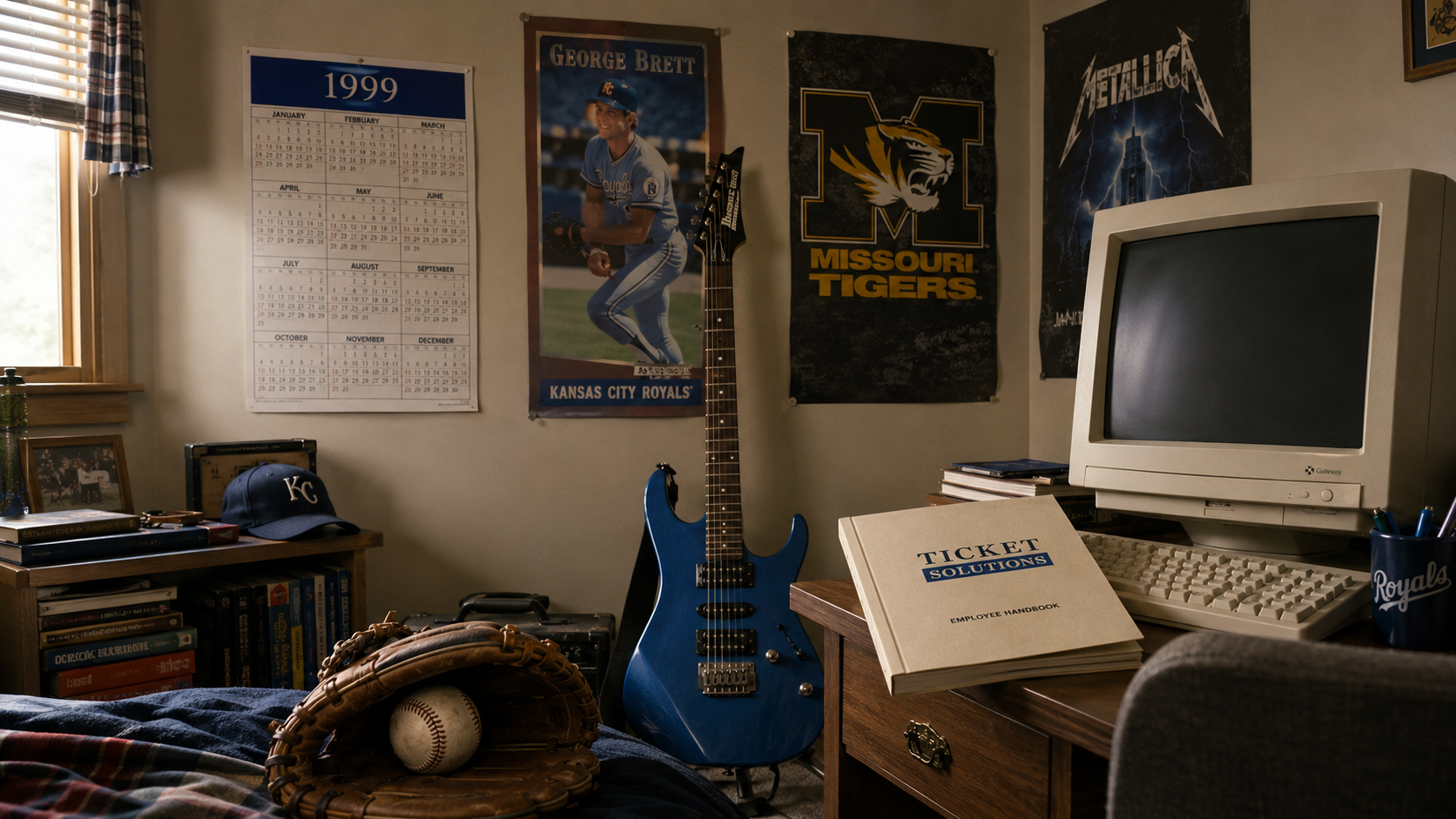
I’ve mentioned before that my first computer was an Epson Equity I+. I got it in 1987 and, unfortunately, got rid of it in the early 2000s. That decision has haunted me ever since.

Well, until recently, when I acquired one and started restoring it.

The restoration has brought back a flood of memories. I can feel the understanding growing every day, like a ten-year-old learning his first computer. Everything is new and fascinating. There’s a race to learn, to explore, to figure it all out.

As I dig into it, I’m constantly amazed. I can almost see the problems through the engineers’ eyes as they designed the hardware and software. There’s simplicity inside the complexity. When something doesn’t work, there aren’t ten layers of abstraction hiding the answer.

You can reason about it end to end.

That experience has been oddly grounding.

Modern systems are incredible, but they’re also opaque. We stack frameworks on platforms on services until even experienced builders rely more on trust than understanding. When something breaks, we hunt symptoms instead of causes.

Restoring this machine reminds me what it feels like to know a system again.
To see how choices connect.
To feel confident not because something is new, but because it’s clear.

That mindset has been showing up in how I think about CoffeeBreak.

AI tools are powerful. The progress is real.
But power without understanding doesn’t eliminate work. It just moves it around. Often onto people, quietly.

Unlike this restoration, with CoffeeBreak I’m not trying to build something nostalgic.
I’m trying to build something coherent.

There’s a quiet confidence that comes from knowing how a system works all the way through.

That’s the feeling I’m chasing, whether I’m restoring an old computer or building something new.

Letting People See the Work Before It’s Finished

There’s a moment in building something where you have to decide who you’re optimizing for.

Early on, it’s just you. Then maybe a small set of ideas, sketches, or prototypes. Eventually, you reach a point where the work is real enough that keeping it completely private starts to hurt more than it helps.

I think I’m at that point now.

The Tension Between Polish and Learning

There’s a strong pull to wait until something feels “done” before letting anyone see it. Polished. Documented. Fully formed.

The problem is that polish often hides the most important feedback.

What I care about right now isn’t applause or adoption. It’s learning. I want to know where people pause, what they misunderstand, and which assumptions don’t survive first contact with reality.

That kind of insight doesn’t come from dashboards or signups. It comes from thoughtful eyes on unfinished work.

Choosing Who Gets to Look

I’m not interested in opening the floodgates yet. Early feedback shapes products, whether you want it to or not, and I’m being intentional about who helps shape this one.

Peers. Builders. People who understand tradeoffs. People who are comfortable saying, “This part feels off,” instead of just asking for features.

That’s who I want looking right now.

Comfortable, Not Rushed

Letting people see something before it’s ready isn’t about being early. It’s about being honest about where the work actually is.

I’m comfortable with people looking. I’m comfortable with it being incomplete. I’m comfortable saying, “This is close, but not finished.”

What I’m not interested in is rushing past that phase just to say it’s launched.

There will be a time to open the door wider. I’m not there yet.

But I’m close enough now that letting people see the shape of it feels like the right next step.

Why I’m Finally Ready to Build This Solution

I’ve had ideas like this before.

Over the years, there have been plenty of moments where a new technology showed up and people rushed to declare that everything was about to change. Sometimes they were right. Sometimes they were early. Sometimes they were just obnoxious and faded out with the fad.

More than once, I chose not to act.

Not because I couldn’t build something, but because it didn’t feel like the right moment. The pieces weren’t there yet. Or the problem was still being solved well enough by humans. Or the solution would have created as many issues as it fixed.

My dad was a video engineer by trade. He was one of, if not the first, people in Kansas City trained to run a slow-motion reel-to-reel machine. His experiences with new and emerging technologies helped shape how I think about when to get involved, and when to sit on the sidelines.

When Chyron video technology began emerging in the 1960s and 1970s, it was used sparingly. My dad wasn’t trained on Chyron yet, but he had an idea. He took a small video camera, mounted it on a tripod, and pointed it at the scoreboard during a baseball game.

Later, he did the same thing for football and other sports.

That simple workaround helped change what viewers came to expect from televised sports. In a nine-inning baseball game, it’s nice to know the inning, the score, and the time at any moment. Today, those elements are permanently embedded on your screen, so normal you don’t even notice them. They’re expected.

My dad saw a technology that wasn’t being used in the best way possible, and he acted at the right moment.

Experience has a way of teaching you when to move. He was right.

It seems like just yesterday

It seems like just yesterday, but I’ve lived through multiple waves of tooling shifts myself. Each one promised to simplify software development. Each one delivered real gains, along with new kinds of friction.

What never really went away was the same underlying problem:
humans doing invisible coordination work between systems that don’t quite understand each other.

We learned to live with it. We staffed around it. We normalized it.

For a long time, that was the right call.

Why This Time Feels Different

What’s changed isn’t just the technology. It’s the combination of things finally lining up, and the growing awareness of the gaps that still need to be filled.

We now have systems that can reason just enough to participate in work, not just execute it. We have workflows that can adapt instead of forcing everything down a single happy path. And we’re finally talking openly about the cost of context switching, glue work, and human babysitting of software.

More importantly, we’ve learned what doesn’t work.

Blind automation doesn’t scale judgment. More tools don’t automatically create clarity. And faster output doesn’t guarantee better outcomes.

Those lessons matter.

Waiting Was Part of the Work

If I’m honest, part of being ready now comes from knowing what I don’t want to build.

I don’t want another system that just moves work faster without understanding it. I don’t want something that replaces human judgment instead of supporting it. And I don’t want to rush something into the world just because the timing feels exciting.

I waited until it felt necessary, not just possible.

Close, But Not Quite There Yet

I’m finally at a point where it feels okay to say that I’m building something. In truth, I have been for months.

I’ll be opening a beta soon. I can’t say exactly when yet. But I’m close enough now that the direction is clear and the product is taking its final shape.

For the first time in a long time, it feels like the right moment to act.

What I’m Paying Attention to as We Head Into the New Year

The stretch between Christmas and the New Year has always been a strange and useful pause.

The calendar hasn’t flipped yet, but the pressure eases just enough to think. Projects slow down. Meetings drop off. You get a little space to reflect without immediately turning that reflection into a plan.

This is usually when I take stock of what’s actually worth paying attention to.

Less Noise, More Signal

There’s no shortage of predictions right now. Every week brings another “AI will change everything” headline, another tool launch, another bold claim about the future of work.

Most of it is noise.

What I’m paying closer attention to is quieter:

  • Where teams are still struggling, even with better tools
  • Where automation helps, but also where it gets in the way
  • How often humans are still doing invisible glue work between systems
  • And which problems keep showing up no matter how advanced the tech gets

Those patterns matter more than any single product announcement.

The Gap That Keeps Showing Up

One thing I keep seeing is a growing gap between capability and clarity.

We have systems that can generate code, route work, summarize decisions, and automate entire workflows. But many teams are still unclear about why certain work exists, who should make which decisions, and when software should act versus pause.

More capability doesn’t automatically lead to better outcomes. In some cases, it just makes existing problems happen faster.

That’s the space I find most interesting right now.

What I’m Intentionally Not Rushing

There’s a strong pull at the start of a new year to rush toward answers.

I’m resisting that.

Some problems benefit from speed. Others benefit from sitting with them a little longer. Understanding how people actually work, where judgment shows up, and where things fall apart, takes time.

I’m okay with that.

Looking Ahead, Quietly

As we move into the new year, I’ll be sharing more of what I’m observing as these ideas take shape. Not polished conclusions, but real thinking in progress.

If you’re curious where that goes next, I’ve started talking out loud in a few places beyond this blog. You’ll find links on the site if you want to follow along.

No pressure. No sign-ups. Just conversation.

Sometimes the most useful thing at the start of a new year is simply paying attention.

The Most Valuable Skill I’ve Seen Engineers Lose, and Why It Matters Now

This time of year has a way of slowing things down.

As winter settles in and we all spend a little more time with family and friends, there’s often a moment when the noise quiets just enough to think. For most people, I’m sure it’s about the magic of the holidays, time with family and friends, or maybe even a warm-weather vacation. For me, my head wanders to my work. Not the next sprint or the next feature, but what actually matters over the long haul.

This year, that reflection keeps coming back to a simple question:

What really makes a great engineer?

After decades in this industry, I’ve seen tools change, paradigms shift, and entire job descriptions come and go. But I’ve also watched one critical skill slowly fade into the background.

And right now, that skill matters more than ever.

It Isn’t Coding Speed or Tool Knowledge

The most valuable skill I’ve seen engineers lose isn’t typing speed, language fluency, or familiarity with the latest framework.

It’s not PR velocity or anything measured by DORA metrics. It’s definitely not who has the deepest front-end framework expertise.

All of those things are valuable. But something else is more important.

It’s the ability to reason through ambiguity.

When I was coming up, we didn’t have the luxury of abstraction layers everywhere. If something didn’t work, you traced it. You reasoned about it. You figured out why.

I’ve mentioned before that I used to test on algorithms in my hiring assessments. They mattered. Not because engineers would be implementing them every day, but because algorithms expose reasoning, tradeoffs, and comfort with uncertainty.

The final part of my assessment was a four-question story titled “One Bad Day.” In it, engineers were faced with real-world problems and incomplete information. There were no right or wrong answers. What mattered was how they handled uncertainty when confronted with it.

Those questions revealed how someone thinks when there isn’t a clear path forward.

As software evolved, we got very good at assembling systems. We got much less comfortable sitting with ambiguity.

Abstraction Is Powerful, But It Has a Cost

Modern tools are incredible. They let us build faster and bigger than ever before. But they also hide complexity, and when complexity is hidden long enough, people forget it exists.

That’s how we end up with engineers who are productive, but uneasy the moment something doesn’t behave as expected. When the happy path breaks, the thinking muscle hasn’t been exercised.

AI accelerates this trend if we’re not careful.

Why This Skill Matters More Now, Not Less

There’s a fear that AI will do the thinking for us.

I believe the opposite.

AI is very good at producing output. It’s much worse at knowing when that output is wrong, incomplete, or misaligned with intent. That gap is where human reasoning becomes invaluable.

The real present in this new era isn’t faster code generation. It’s the opportunity to refocus engineers on judgment, evaluation, and problem framing.

Those are learned skills. They compound over time. And they don’t disappear when tools change.

The Gift That Actually Lasts

As you head into the end of the year, maybe while you’re opening presents or just enjoying a quieter moment, this is the thing worth investing in.

The greatest gift you can give yourself as an engineer isn’t another tool or certification. It’s the willingness to slow down, sit with ambiguity, and reason your way through it.

That skill never goes out of style.