After the Fireworks

I meant to write this before the weekend.

That was the plan, anyway. Sunday is supposed to be blog day. I had the idea. I had the theme. I had the intention.

Then life happened. Good life, but life.

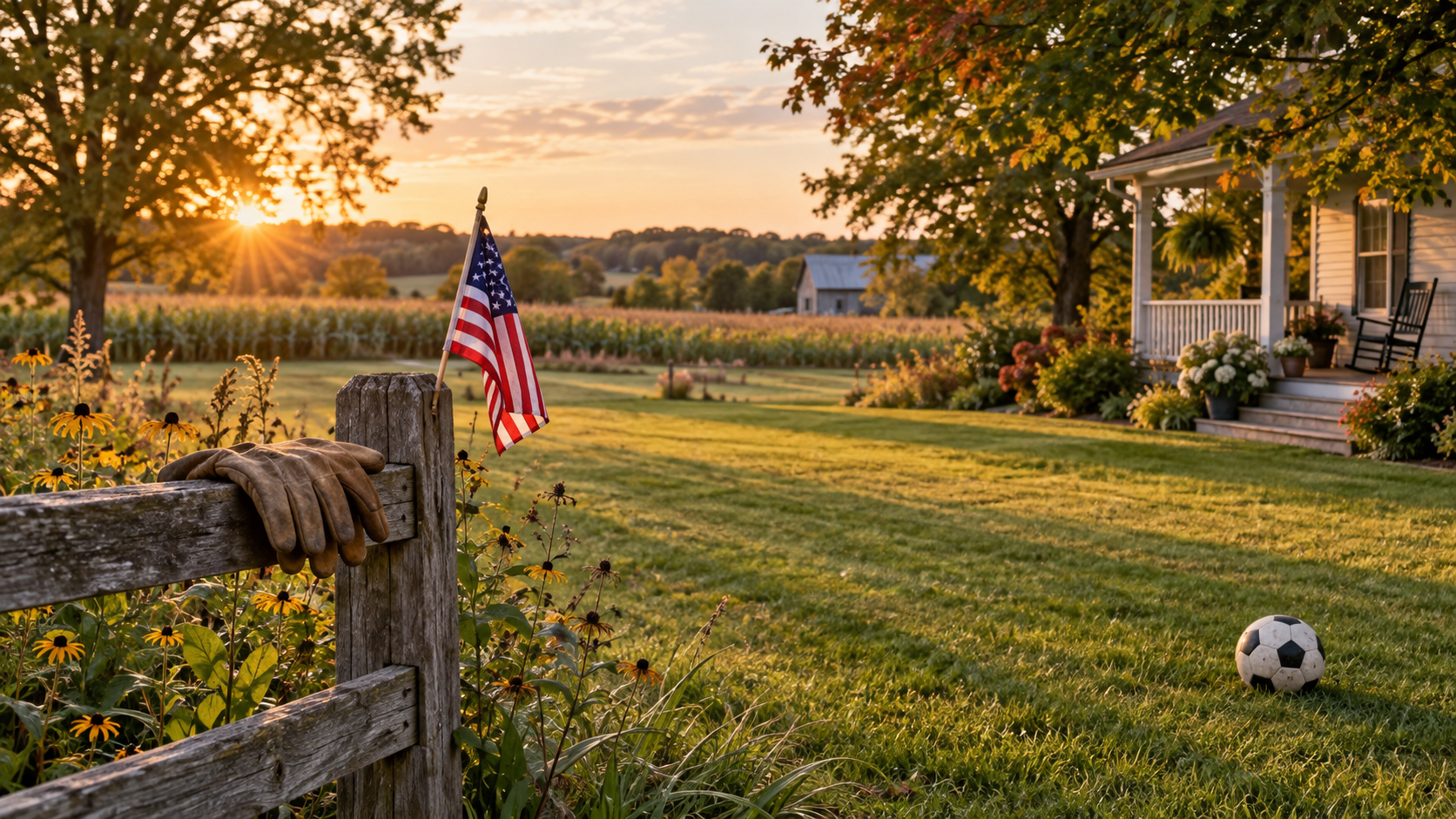
On Saturday we hosted a party for the 250th birthday of the United States. It was spectacular. Friends came over. People pitched in. There was food, setup, decorating, cooking, cleaning, kids running around, conversation, and one of those nights where the work fades into the background for a little while and you just get to be grateful that everyone is there.

And the fireworks were great.

There is something about fireworks that still gets me. You know they are planned. You know someone bought them, set them up, thought through the timing, watched the conditions, and made sure everyone was standing far enough back. But when they go off, you stop thinking about all that for a moment.

You just look up.

That feels about right for the 250th birthday of the country too.

Freedom can become an abstract word if we are not careful. It is easy to turn it into slogans or arguments or the kind of thing people only talk about when they are already mad.

But freedom is also very practical.

It is the ability to gather with friends in your own yard. To cook food. To let kids run around. To build a life. To disagree and still share a table. To work hard for something that is not required, but is worth doing anyway.

A good party does not happen by accident. Neither does a good life. Neither does a free country.

There is the visible part everyone remembers. The lights. The food. The music. The laughter. The fireworks.

Then there is the part underneath.

The planning. The mowing. The hauling. The setup. The dishes. The trash. The things that have to be moved, fixed, carried, cleaned, and checked before anyone arrives. There are the real challenges of storms blowing through and power going out just hours before the party starts.

And then there is the morning after.

That might have been the part that stuck with me most this year. Not because cleanup is glamorous, because it is not. But because a few people came back and helped us clean up. Friends pitched in before, during, and after.

That is a small thing, but it is not a small thing.

A lot of what matters in life is held together that way. Not by one person doing everything. Not by the big speech or the big show. But by people noticing what needs to be done and doing some of it.

That is easy to miss if you only look at the fireworks.

The older I get, the more I appreciate the work behind the moment. The patience behind the celebration. The maintenance behind the freedom. The cleanup after the party, even if the sun beat down and fatigue set in.

Maybe that is why posting this late does not bother me as much as it might have a few years ago.

Before the weekend, this would have been a post about anticipation. About what the 250th meant before the fireworks went up.

After the weekend, it feels more honest.

The lesson was not just in the celebration.

It was in the setup.

It was in the people who helped.

It was in the cleanup.

It was in the reminder that the things worth celebrating usually require the most care after the big moment passes.

And maybe that is a pretty good lesson for a country turning 250.

Freedom is not only something we inherit. It is something we keep making room for, keep cleaning up after, keep choosing to protect, and keep practicing in ordinary ways with ordinary people.

Saturday night was spectacular.

Sunday morning was quieter.

Both mattered.

The First Version Is Not the Finish Line

There is a specific kind of energy that shows up when something works for the first time.

A script runs without crashing.
A prototype loads.
A button does the thing it was supposed to do.
A robot says the right words back.
A little idea that used to only exist in your head suddenly becomes something you can point at.

That moment is fun. It should be fun. It is one of the reasons I have loved building things for as long as I can remember.

But I have also learned, usually the hard way, that the first version is not the finish line. Not by a long shot. Quite honestly, once something works, you finally get to see what you actually built. Not what you imagined. Not what you intended. The real thing.

And the real thing always has something to teach you.

A topic that spends way too much time bouncing around my head lately is how modern AI has changed how quickly people can get to that first version.

Someone with an idea, some patience, and the willingness to keep trying can build a surprising amount now. Things that used to require a full team, a budget, and a long runway can sometimes be roughed into shape by one person with the right tools and a lot of willpower.

This actually reminds me of my early career. When I started building software professionally, the internet was still new. If you needed an algorithm, you did not just look it up online. You used a thick book that contained some author’s thoughts on how to build good software. Often there would be a small bit of source code you could translate and apply to your problem, but really it was you and your wits trying to figure it out.

That meant a lot of trial and error.

Does that sound familiar with how we interact with AI now? Does it sound a little like how AI operates under the hood? I think so.

And as we saw software engineering evolve over my career, I think it made the next layer more important, not less.

Because “it runs” and “it is ready” are not the same sentence. Early in my career, getting working code was often the most important part because everything was brand new. We launched companies on version 1 software.

The first version can hide a lot.

It can hide duplicated code that will become painful later.
It can hide business rules in places they do not belong.
It can hide security decisions that felt harmless in the moment.
It can hide missing tests, unclear ownership, inconsistent patterns, or assumptions that only worked because the first user happened to click the right path.

That does not make the first version bad. It makes it a first version.

Twenty-five years ago, we started at version 1, but we had many years to evolve to versions 2, 3, 4, and beyond. Now, we do not always have years to figure it out and evolve. We need to find ways to evolve as fast as the tools around us are evolving.

This is not a new phenomenon outside of software either. This has been true in life as well.

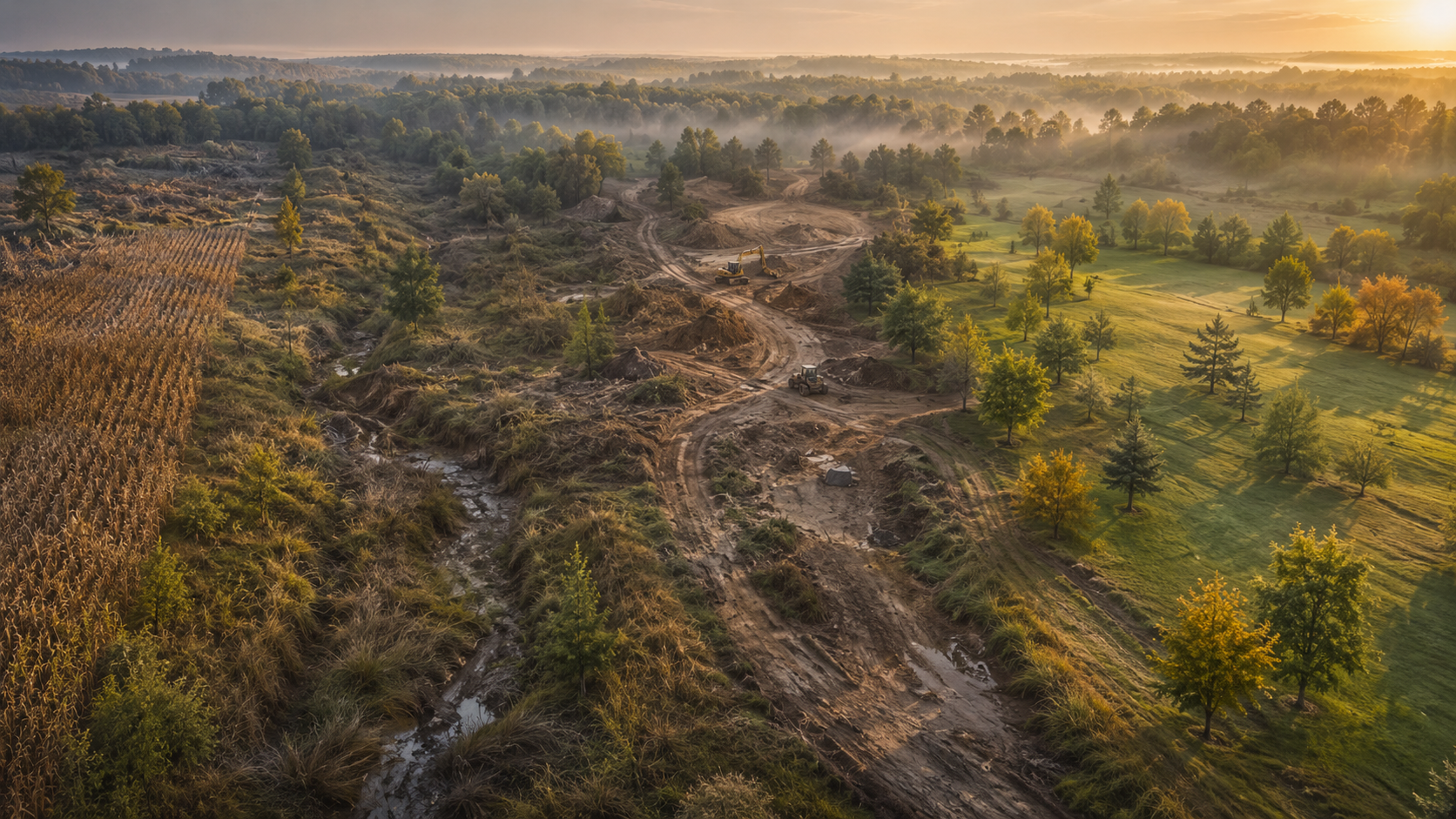
When I bought my acreage, it was a corn field overgrown with weeds. It had large ruts and ravines in the ground where water had run wild for years. There were berms built to direct the flow, but it made for a hilly and hole-filled property.

Fixing this took years of trial and error. The first pass at anything was rarely the final answer. You filled one ditch and knocked down a berm, only to find water puddling and running free somewhere else. You took out some trees and got a swampy marsh. You fixed one thing and it revealed the next thing that needed attention all along.

The land teaches you after you start working with it.

Software does too.
So does a business.
So does a life, really.

There is a humility that comes after the first successful run. The exciting part is proving that something can exist. The quieter part is making it dependable enough to keep around.

That quieter part is where a lot of the real craft lives. It is the part where you ask better questions.

What did this expose?
What does this depend on?
What happens when it fails?
Who needs to understand it besides me?
What would make someone else trust it?
What would make me trust it six months from now?

I have been thinking about this with the Open Jibo project I am working on. Getting an old robot to speak again, respond again, dance again, or feel a little more alive again is deeply satisfying. But every working behavior opens up the next layer. How does it recover? How does it remember? How does it handle the strange edge case? How does it become more than a neat demo?

That is also a lot of what I am thinking about with CoffeeBreak.

AI can help us get to first versions faster. That is a big deal. In reality, the future I am interested in is not just faster prototypes. There is value there, but the real value is in better paths from prototype to trust.

More useful review.
Clearer feedback.
Better context.
The right voice for the right person.
Systems that know when to act, when to ask, and when to slow down.

I do not think the first version should be dismissed. The first version matters, just like back when we launched companies on version 1 software. It is proof of motion. It is often the hardest emotional step because it turns an idea into something real enough to criticize.

But it should not be asked to carry more weight than it can.

The first version is a beginning.

Then comes the work of listening to it.
Then comes the work of improving it.
Then comes the work of deciding what kind of thing it is actually becoming.

It is important to apply attention where it needs to live, and that is where I am trying to spend more of my attention these days.

Not just on whether something can work once.

On whether it can become something worth trusting.

The Longest Day and the Smallest Question

Father’s Day and the summer solstice do not land together very often.

However you count the next one, we have a lot of years to wait before this alignment comes around again. That makes today feel worth noticing.

A day for fathers.
A day for light.
A day that marks the start of a new season.

When seasons change, it is a good time to pause. Not for too long, because the work rarely stops coming, but long enough to look around and ask what season you are actually in.

As a father, builder, and business owner, I keep learning that the work never really disappears. It just changes shape.

Sometimes you are planting seeds for a future harvest. Sometimes you are repairing things that did not go as well as you hoped. Sometimes you are trying to appreciate what is already growing right in front of you. And if you are lucky, you get another chance to reap what you sowed, learn from it, and prepare better for the next season.

My son is almost four now, and he is fully in his “why?” phase.

No matter where we are, what we are doing, or what we are talking about, he wants to know why.

Why does that happen?
Why do we do it that way?
Why can’t I have that?
Why is it time to leave?
Why?

It is fun. It is also humbling. Explaining life in the simplest possible terms is harder than it sounds. I never thought I would be the dad who said “because I said so,” but I may have said it more times than I care to admit.

That little question has been following me into my work too.

A lot of my life right now is building, planning, reaching out, managing money, writing, marketing, experimenting, and trying to grow Transcendent Software into the next season. It is exciting. It is also a patience exercise.

For most of my career, I was used to feedback coming from somewhere. Sometimes it was good feedback. Sometimes it was frustrating feedback. Sometimes I had to wait longer than I wanted for the right feedback. But feedback is feedback. It helps steer the ship.

Now the feedback loops are different.

Some days are outreach. Some days are writing. Some days are building CoffeeBreak. Some days are working on Open Jibo. Some days are finances, planning, or figuring out what message will connect with the right person at the right time.

The work is still there. The season is just different.

And maybe that is the lesson of Father’s Day landing on the solstice.

The longest day is not empty just because there is more light. It gives you more room to notice what needs attention.

Where are the seeds going in?
What needs repair?
What have I already been given?
What is this season asking of me?

My son keeps asking why because he is trying to understand the world.

I think adults need that question too. Maybe especially when we are busy. Maybe especially when we are building something new.

Why am I doing this?
Why does this matter?
Why this way?
Why now?

Some seasons are for planting. Some are for harvest. Some are for repair. Some are for patience.

The trick is learning which one you are in.

Happy Father’s Day to all the dads out there. I hope you get a little extra light today, and maybe a minute to notice what this season is asking of you. ☕

The Reward is in the Routine

I used to think the reward was the result.

The launch.
The finished project.
The clean before-and-after.
The moment where all the work finally turns into something visible enough that other people can understand it.

And those moments are real. They matter.

But lately I have been noticing something else.

A lot of the reward is not waiting at the end. It is hidden inside the routine itself.

Sunday has become one of those days for me.

It is not a perfectly quiet, monk-like writing day. It is not some highly optimized founder ritual with the same coffee, the same chair, the same two-hour block of uninterrupted focus every week.

It is more ordinary than that.

There is family life. There is land to keep up with. There are chickens and gardens and things that need fixed. There are business decisions, software ideas, Jibo experiments, CoffeeBreak thoughts, client work, bills, errands, and the general background hum of trying to build the next chapter without dropping the life I already have.

And somewhere inside all of that, I try to come back to the work.

Not perfectly.
Not always cleanly.
But consistently enough that it starts to become a rhythm.

That rhythm matters more than I expected.

Because when you are building something new, there are a lot of days where the scoreboard is not very satisfying.

The business is not yet where you want it.
The product is not yet where you see it in your head.
The writing is not yet as sharp as you hoped.
The project is not yet finished.
The idea still has rough edges.
The path forward still has fog on it.

If the only reward is the finished version, you can spend a long time feeling like you are behind.

But routine gives you something else.

It gives you a place to stand.

It says: this is what we do today.

We write the next piece.
We make the next improvement.
We fix the thing that is broken.
We follow up.
We think clearly for a little while.
We make one more honest pass at the work.

That is not glamorous, but it is stabilizing.

I think that is part of why I am drawn to systems, whether I am thinking about software, AI, business operations, or just life on a few acres. A good system does not remove effort. It gives effort somewhere useful to go.

A routine works the same way.

It does not make every day easy.
It does not make every decision obvious.
It does not guarantee that everything will work out.

But it gives you a way back in.

That has been important for me in this season.

I am building Transcendent Software into the kind of company I want to run. I am building CoffeeBreak toward the kind of AI orchestration platform I believe needs to exist. I am bringing Jibo back to life piece by piece through Open Jibo Cloud. I am writing more, sharing more, and trying to be more visible about the actual work instead of waiting until everything feels finished.

None of that happens in one dramatic push.

It happens by returning to the routine.

Some days the routine produces something obvious: a post, a feature, a fix, a conversation, a working demo.

Other days it only produces momentum.

That used to feel like a small reward.

Now I am not so sure.

Momentum is not small when you are trying to build a life that can hold the work.

The routine is where you learn what kind of builder you are becoming. It is where your ideas get tested against time, energy, family, weather, obligations, distractions, and your own limits.

It is where ambition has to become honest.

And maybe that is why the reward is not only at the end.

The reward is in becoming the kind of person who keeps returning to the right work.

Not because every day feels inspired.
Not because every effort gets applause.
Not because the outcome is guaranteed.

But because the routine itself starts to shape you.

It makes the work less fragile.

It makes progress less dependent on mood.

It gives your future somewhere to gather.

That feels worth paying attention to.

So for now, I am trying to treat the routine with a little more respect.

The Sunday writing.
The weekly planning.
The small improvements.
The unglamorous follow-through.
The next useful conversation.
The next piece of the system.

Not as chores standing between me and the reward.

As part of the reward itself.

Still building. Still finding the rhythm. ☕

The Pattern Underneath the Product

When I first started thinking seriously about CoffeeBreak, I was thinking about software.

That makes sense. Software is the world I know best. I have spent a long time around teams trying to plan, build, review, test, ship, support, fix, and improve systems. I have seen the good version of that work, and I have seen the version where everything depends on memory, heroics, scattered notes, half-finished automation, and a few people quietly holding the whole thing together.

So when AI started becoming useful in a more practical way, my mind went there first.

What would it look like if AI did not just answer questions, but actually helped coordinate the work? What if it could understand the plan, help with the build, participate in review, support testing, prepare deployment, observe what happened afterward, and carry lessons forward into the next cycle?

That was the beginning of CoffeeBreak for me.

The pattern was simple enough:

Plan. Develop. Review. Test. Deploy. Observe. Evolve.

On the surface, that sounds like software delivery. It is software delivery. But the longer I sit with it, the more I realize I may have been looking at one example of a much bigger pattern.

Most meaningful work follows some version of that same loop.

You figure out what needs to happen. You create a first version. You check it. You test it against reality. You put it into the world. You watch what happens. Then you improve it.

That is how software gets better, but it is also how a business process gets better. It is how a team gets out of tribal knowledge and into something repeatable. It is how a messy internal workflow becomes a real operating system for the company. It is even how a little robot like Jibo starts to feel alive again after enough small pieces are wired together, tested, observed, and improved.

The nouns change, but the shape of the work is familiar.

That is the part I keep coming back to.

A lot of the AI market moved in the other direction. The big push was to get users first. Get people into the chat box. Get adoption. Get usage. Then start figuring out how all of this turns into platforms, workflows, agents, permissions, memory, automations, and business systems.

I understand why that happened. It got AI into people’s hands quickly. It changed expectations. It let millions of people experience something that had been theoretical for a long time.

But there is a difference between adding workflow features later and building from the workflow outward.

That difference matters.

CoffeeBreak was never supposed to be just another chatbot. It was never supposed to be a one-trick pony for software teams either. Software delivery is the first doorway because it is real, difficult, and familiar to me. It is full of the exact problems that AI orchestration has to solve if it is going to be useful: context, judgment, review, tools, handoffs, feedback, and change over time.

But if the platform is built around the shape of real work, then the opportunity is bigger than one use case.

A customer onboarding process has a version of this pattern. So does support. So does compliance. So does reporting. So does content. So does internal operations. Almost every business has some process that is too manual, too fragile, too dependent on one person, or too disconnected from the tools around it.

Those problems do not need AI magic.

They need structure. They need judgment. They need tools that work together. They need humans in the right places. They need a way to observe what happened and improve the system over time.

That is where CoffeeBreak starts to feel bigger to me than the original idea.

It is still early. That is important to say plainly. I am not claiming the platform has already become all of these things. But I do think the pattern is strong enough to plant the seeds now, before there are a thousand assumptions baked into the product and a thousand users pulling it in different directions.

There is an advantage in building early with the right people and the right problems.

Through Transcendent Software, I get to stay close to real business pain. Not imaginary use cases. Not pitch-deck workflows. Real problems where someone knows the work should be easier, but does not yet know how software, automation, and AI should fit together.

That is a good place to build from.

Because the future I am interested in is not AI that looks impressive for five minutes. It is AI that helps real work move through a real system with memory, tools, review, feedback, and accountability.

Plan the work. Do the work. Check the work. Test the work. Put it into the world. Watch what happens. Make it better.

That is software.

That is business.

That is building.

And the more I work on CoffeeBreak, the more I think I was not just building a product for one workflow. I was finding the pattern underneath the product.

Still building. Still learning. More to come. ☕

Expert First, Trusted After

I have been thinking a lot about the word expert lately.

It is a strange word, because most people do not become experts while looking like experts. They become experts while trying things that are half-working, while fixing something that broke for the third time, while realizing the elegant idea from yesterday does not survive contact with the real world.

That has been true for most of my life.

I have always been drawn to systems. Old computers. Software projects. Business problems. AI ideas. Robots. The little details that make something feel alive instead of just technically functional.

Lately that has shown up in a few places at once. I am building Transcendent Software full time. I am working toward CoffeeBreak as a bigger product vision. I am reviving Jibo through Open Jibo Cloud. I am thinking about websites, blogs, videos, podcasts, social posts, consulting, product work, and whether any of this can become a real engine instead of a pile of good intentions.

The funny thing is that the work itself is the clearest argument.

If I want people to trust me as someone who can help with AI systems, software modernization, automation, architecture, or technical leadership, I probably do not need to pretend I have a perfect machine already humming in the background.

I need to show the work.

Show the thinking. Show the decisions. Show the messier middle. Show the way a robot comes back to life one capability at a time. Show the way a consulting business becomes clearer by solving actual problems instead of polishing slogans. Show the way a product like CoffeeBreak emerges from real operational pain, not from chasing whatever AI headline is loudest this week.

That is the kind of confidence I trust in other people too.

Not the confidence of someone who says they have it all figured out. The confidence of someone who has been in the weeds long enough to know where the roots are.

So maybe that is the content plan for now.

Keep building. Keep writing. Keep showing the reasoning. Keep sharing the progress before it is perfectly packaged.

The expertise was built over years. The trust will probably be built one useful piece at a time.

More to come. ☕

A Season For Change

I have always been someone who appreciates the changing of the seasons.

There is something grounding about them. Spring becomes summer. Summer becomes fall. Life moves forward whether we are ready for it or not. Memorial Day, while not technically the start of summer, has long felt like the unofficial beginning of it to me. The pools open. The grills fire up. Baseball settles in. The evenings get longer. People step outside again.

This year feels like the biggest season change of my life yet.

On Friday, the sun sets on my chapter with Ticket Solutions and TFL, and a new chapter begins. It is strange to even type that after all these years. Exciting too.

As a kid, I was fascinated by technology. I remember taking apart our old tube TV after it died just to see how it worked. I took apart computers and gaming systems too, always wondering if there was some way to rebuild them into something more than they originally were.

In some ways, this moment feels a lot like that.

I built a successful career over the last couple decades. I am incredibly thankful for it. But now it is time to carefully take the pieces back apart and see if I can build them into something even bigger and more meaningful.

That does not mean slowing down.

In fact, I expect to work harder than ever.

But for the first time in a long time, all of my energy can flow into the things I truly believe in. Getting back ten or so hours a week from commuting alone feels like someone handed me part of my life back.

Some of that time will go to family. Some of it will go to friends. Some of it will go to summer evenings, BBQ smoke, baseball games, fishing trips, and sitting outside under the stars thinking about what comes next.

But a lot of it is going into building.

I want to continue growing Transcendent Software and helping companies navigate AI, automation, and smarter systems in practical ways. There is a lot of excitement in the market right now, but also a lot of confusion. It is easy to become fascinated by a machine doing magical things. The harder part is understanding where AI fits, where it does not, where humans still need to stay involved, and how the entire system works together.

That part matters.

Anyone can bolt AI onto a workflow. Building systems that are reliable, useful, and genuinely improve how people work takes much more care.

That is also a big part of why I believe so strongly in CoffeeBreak. The platform already has a solid foundation, but now it needs real-world feedback and human guidance to shape what becomes truly meaningful. I can sit in a room and build forever, but eventually the builders need the users. Even in AI, humans in the loop still matter.

Maybe now more than ever.

Then there is Open Jibo.

That project pulls at me in a different way. I genuinely want to help bring something back to people that they lost too early. Jibo was ahead of its time. The hardware may be dated now, but it is still capable of creating joy, connection, and meaningful experiences. When the original company disappeared, people lost more than a gadget. They lost something they had emotionally connected to.

I think the work being done by the Jibo Revival Group and the broader community has the potential to give some of that magic back.

And finally, how about some fun?

Summer should still be about fun.

I am looking forward to more time with family and friends. BBQ. Nature. Fishing. Baseball. Late nights outside. Long conversations. Small adventures. This year also leads into the 250th anniversary of this great nation, and I am excited to see how the weeks leading into Independence Day unfold and what kind of celebration we can put together this year.

I have a feeling it will go off with a bang.

Honestly, that is probably how I would describe this entire season of life right now.

A season for change.
A season for building.
A season for possibility.

And I could not be more excited for what comes next.

Still Building

Lately I have been thinking about how strange life can be. One chapter starts closing, and suddenly you can see the whole road behind you a little more clearly.

I have already shared that I am leaving TFL, and that has naturally pushed me into reflection. Not just on the last few years, but on more than 25 years professionally, and really close to 40 years since I first got my hands on a computer that felt like mine.

My first machine was an Epson Equity I+. Long before I had any clue where my career would go, I was already hooked. I still remember the first time my cousin and I got our computers talking over a modem from houses miles apart. At the time, it felt like magic. Then came BBS systems, early online experiences, and those first little windows into what a connected world could become.

Back then, limits were not frustrating. They were invitations.

When services charged by the email message, I remember trying to outthink the system. On Prodigy, one trick was sending mail to a dead end so it would bounce back, then sharing account credentials in chat so someone else could retrieve the returned message as a private message. Looking back, that probably told me something about myself pretty early on. I was not just interested in using systems. I wanted to understand them well enough to bend them.

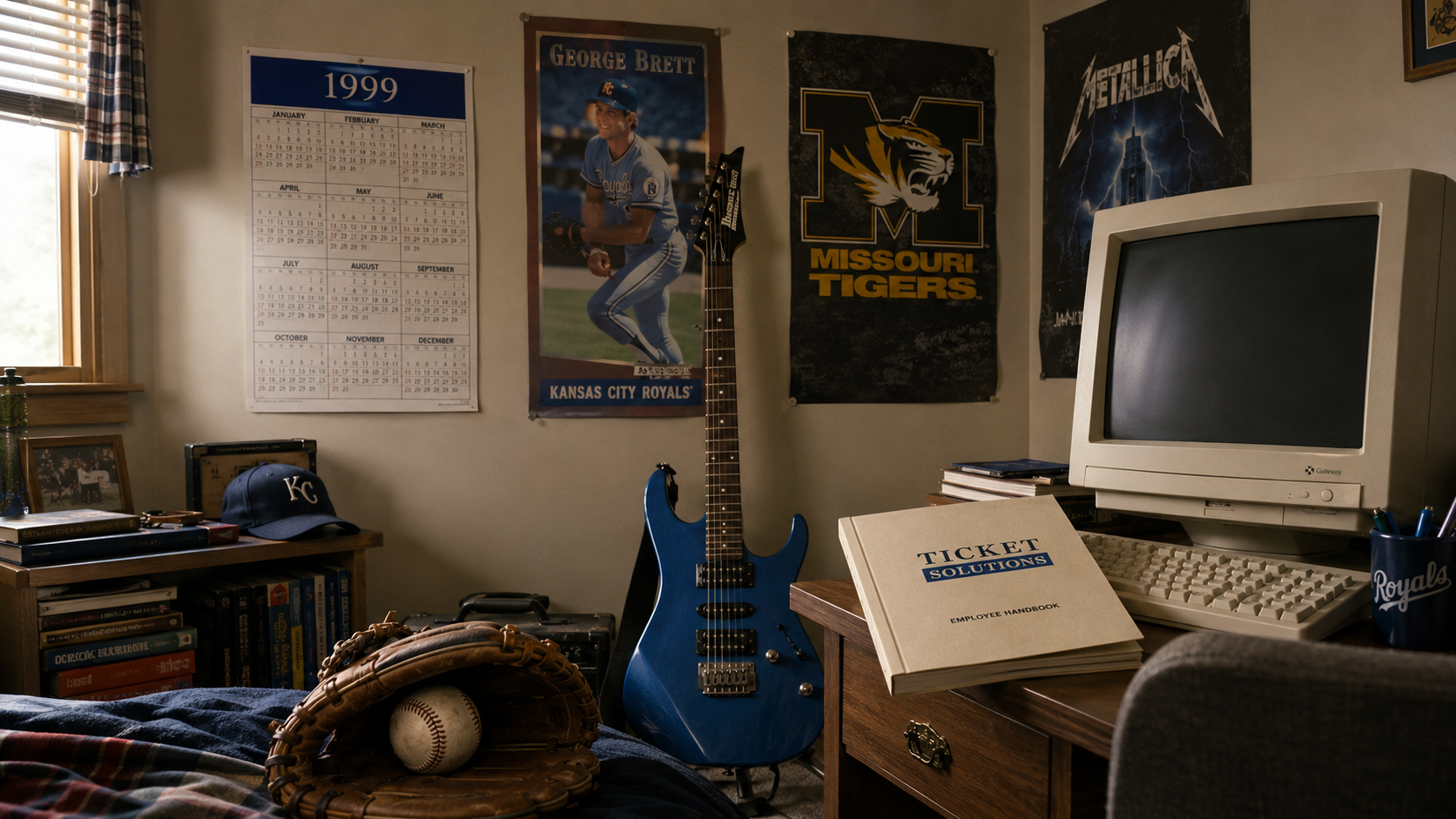
Later came Windows 95 and my next computer. I really wanted a Gateway, but ended up with a Compaq Presario. That machine became a workshop. I hosted an FTP server and web server over my DSL line and built sites for local businesses. I started Compu-Doc and spent time in homes and small businesses fixing computers, setting up networks, and solving whatever problem was sitting on the desk in front of me.

That season taught me something important. I could do hardware and networking, but software was the thing that lit me up.

So I kept learning. Visual Basic. Java. C. COBOL. JCL. Oracle. College gave me the path, but curiosity supplied most of the fuel. I wanted to know how things worked, how they broke, and how they could be rebuilt better.

Then came Ticket Solutions, and the rest of the story started taking shape.

One of the most meaningful chapters was helping build what became the industry’s first real-time ticketing exchange. What makes that story more interesting to me is that I was not originally assigned to the project. At the time, I was building what we called Spinner software, which automated buying tickets on Ticketmaster. It was the wild west of online ticketing back then, long before the guardrails that exist today.

The other engineers were focused on ecommerce, POS, and the first exchange prototype. They took that prototype onsite to deploy it, and it did not work. When they got back, we regrouped and rebuilt it around ideas from chat server technology. More of a hub-and-spoke model, with clients connected to a central server through sockets so we could instantly access their databases when needed.

That system worked. We launched it. A few years later, patents followed. Then the technology and patents were sold to StubHub.

That was not the end. It was one bend in a long road.

Over the years, we built more companies, more products, and more technology. In 2009, I founded Transcendent Software, as I saw a need to help more and more businesses with interesting technology problems, and I did, but my day job kept me quite busy, so expansion was not on the table, yet. With the family of companies I worked for, we explored neural networks before that was fashionable dinner-table conversation. We worked on advanced machine learning. I spent time with genetic algorithms and optimization problems, like taking traveling salesman ideas and applying them to real-world logistics. Some bets worked. Some did not. That is the nature of building. You plant a lot of seeds, and not every one becomes a tree.

In 2013, we pursued patents around technology for analyzing social media for signs of distress in kids. We believed parents would want alerts when something seemed wrong. We invested in it, did the work, and then shut it down after research suggested parents would not pay for it. I still sometimes wonder what would have happened if we had pivoted the use case instead of walking away. But every builder has a few doors in memory that never got opened all the way.

From there came logistics, data, and scaling VeriShip with a sharper focus on data science and contract negotiation. Then a return to Ticket Solutions full-time with an emphasis on process automation. Then COVID-19. Then Ticket Solutions being acquired by TFL.

And then another reinvention.

We helped take a company in TFL with very little technology muscle and turn it into a real technology-powered business. It worked. The company grew in big ways. And now here we are, with me stepping away from that chapter too.

Crazy.

When I look back, what stands out is not just the companies, patents, exits, or titles. It is the thread running through all of it. Curiosity. Building. Adapting. Looking at a system and believing there is probably a smarter way.

That part of me has not changed since the Epson days.

So where am I headed next? I am still a builder. Still a systems thinker. Still drawn to the space where software, data, intelligence, and practical business value meet. If anything, I trust experience more now than hype. I care more about what works, what lasts, and what actually helps people move forward.

I do not know exactly what the next chapter will look like yet.

But I know this much. I am still building.

Growth Happens Before You Feel Ready

This weekend felt like one of those moments where you realize life is changing while you’re still trying to keep up with it.

My son suddenly wants to help with everything outside. Not just ride along on the mower for fun, but actually help mow the property, do weed eating, and be part of the work. We spent part of the weekend working on the land together and somewhere along the way it hit me that he’s growing. He’s starting to become capable.

That sneaks up on you.

We also spent time planting flowers, working around the property, and dealing with spring projects. I hatched a few more chicks this week too. Some made it, some didn’t. That’s just part of raising animals and living a little closer to nature. Things grow, things fail, and you keep moving forward.

Mother’s Day was good too. Family time, good weather, slowing things down for a minute. Watching everything my wife does for our family always reminds me how much growth happens quietly in the background while everyone else is focused on bigger, louder things.

At the same time, the technology world feels like it’s changing faster than ever.

Every week there’s another AI announcement, another new model, another prediction about how everything is about to change. Some of it is hype, but some of it is real. You can feel the shift happening underneath everything now.

That’s part of why I’ve been so focused lately.

CoffeeBreak is evolving quickly. My thinking around orchestration, memory, smaller expert systems, and long-term AI behavior is changing almost weekly right now. Jibo keeps improving little by little too. New versions, new features, more personality starting to come back into the system.

It feels like a lot of things are growing at once.

Some of it is exciting.
Some of it is uncertain.
Most of it is happening faster than expected.

I think that’s just life sometimes.

You make plans, and then growth changes the shape of them.

Your kids grow.
Technology changes.
Your priorities shift.
New opportunities appear before you feel fully prepared for them.

And somewhere in the middle of all of it, you realize the future isn’t some distant thing anymore.

It’s already showing up around you in small ways every day.

The trick is noticing it while it’s happening.

Working Through It

Lately I’ve been focused on making progress.

Not the kind you see in demos or announcements. The kind where you’re just trying to move things forward a little at a time. Fix something. Improve something. Keep things from drifting too far off course.

That’s been true across everything.

Work has been steady. I had a good onsite with a client. Productive, grounded, the kind of work that reminds you why experience matters. At the same time, I’ve been pushing forward on my own projects. Jibo has mostly been regression testing. Fixing things, breaking things, trying to get to a version that feels stable. Versions don’t mean much without users, but they help me stay disciplined. They give me something to work toward.

CoffeeBreak has been a different kind of work. Less visible, more foundational. Thinking through user experience, agent loops, how systems should behave over time. Not just what AI can do, but how it fits together. I find myself thinking more about structure than features. Planning for things like memory, cost, how to use smaller models effectively instead of just reaching for the biggest one available.

It’s a lot of thinking. A lot of iteration.

And then there’s everything outside of that.

We’ve been spending time as a family, which has been good. A few days off helped reset things a bit. Spring is here, so we’ve been working outside more. Planting, tending to the land, adding more chickens. It’s work, but it’s a different kind of work. Slower. More tangible.

Not all of it goes the way you want.

Today was one of those days. We lost a few baby chicks. One didn’t make it out of the shell. One probably got trampled. Another overheated. That’s just part of it, but it doesn’t make it easier. You try to do everything right, and sometimes it still doesn’t work out.

That’s nature.

I’ve still got others at different stages, more eggs in the incubator, so it’s not a loss that sets us back. But you feel it anyway.

Same with the dogs. They’re getting older. You start to see it in small ways at first, and then more clearly. It’s part of the cycle, but it’s not something you really get used to.

Mother’s Day is coming up next week. That brings its own mix of emotions. Losing my mom still feels recent, even though time keeps moving forward. At the same time, I see everything my wife does every day for our family, and it puts things in perspective.

All of it together, it’s just life.

Messy, sometimes frustrating, sometimes really good. Rarely clean or predictable.

I think that’s why I don’t get too caught up in perfect outcomes anymore.

Whether it’s building systems, raising animals, or just trying to take care of a family, progress usually looks the same.

You keep showing up. You keep adjusting. You take the wins where you can, and you learn from the rest.

And you move forward.