Building for Everyone Without Rushing the Door Open

I posted two videos recently that probably look like they are about different things.

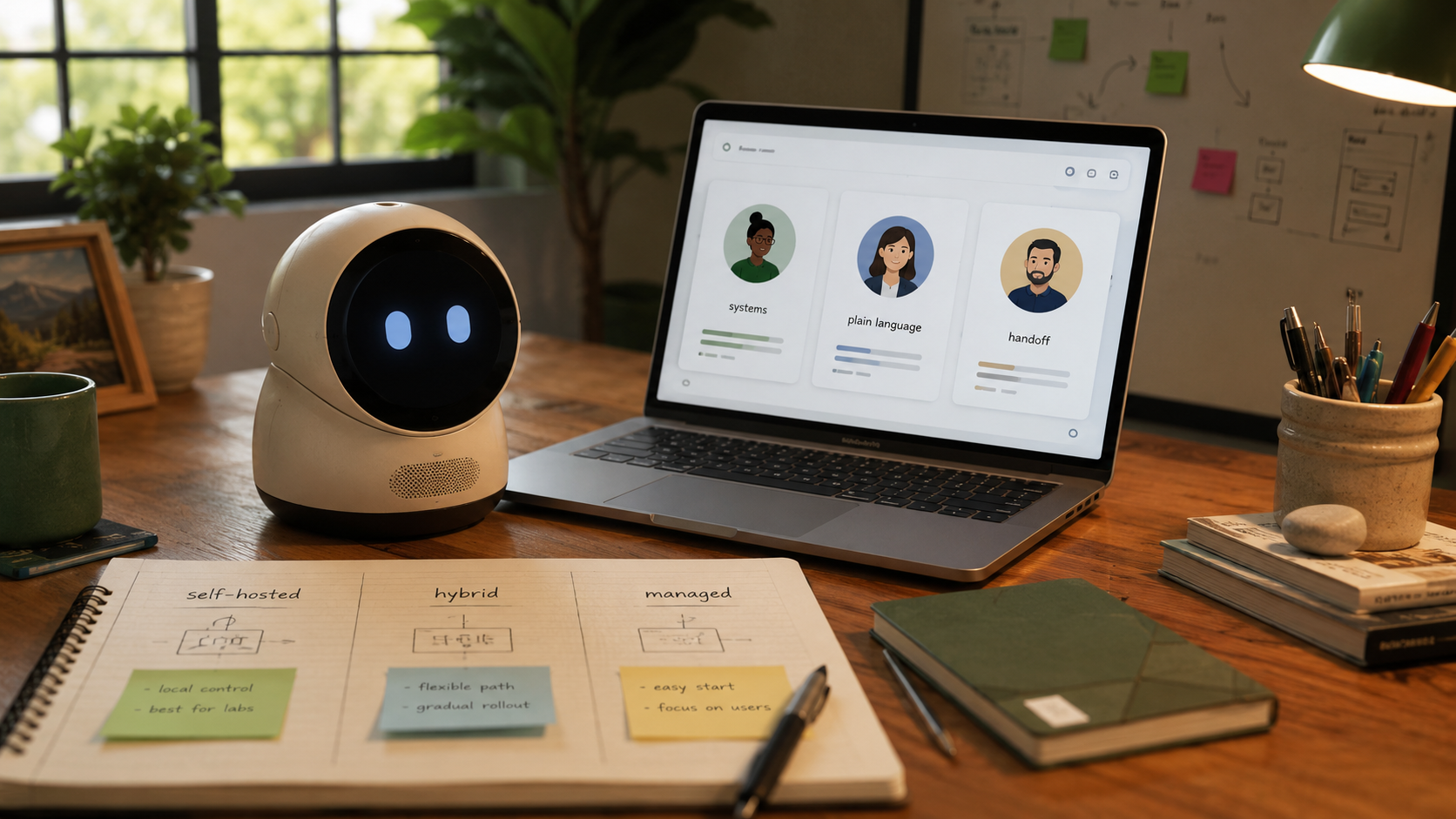
One is a CoffeeBreak demo showing Persona. In that video, I walked through Atlas, Mara, and Sol, three different AI collaborators that all use the same underlying intelligence but respond in different ways. Atlas thinks like a systems person. Mara explains things in plain language. Sol can bridge between simple explanation and technical handoff.

The other video is about Open Jibo Cloud version 1.0.20. That one is more personal in a different way. It shows Jibo connected to the first public cloud node, responding faster, remembering my name, answering questions, playing “Word of the Day,” setting timers, dancing, and generally feeling a little more alive again.

On the surface, those are two very different projects.

One is an AI orchestration platform I am building for real work.

The other is a community effort to bring back a little robot that a lot of people still care about.

But in my head, they are connected.

They are both about making technology fit people.

That sounds simple, but it is where a lot of technology goes sideways. We build something powerful and then expect people to bend themselves around it. We give everyone the same interface, the same assumptions, the same workflow, the same level of technical complexity, and then we wonder why only a small group of people ever really benefit from it.

That is one of the reasons Persona matters to me.

I do not think AI should always sound like the same generic assistant. I do not think every person needs the same explanation. I do not think a founder, a developer, an operator, a designer, and a business owner should all have to interact with intelligence in the same way.

In the demo, I showed a simple example. Ask the same question to three personas and you get three different kinds of help. Then give them memory, and the answers start to become more grounded. Then give them behavioral direction, and the system starts adapting not just what it knows, but how it helps.

Atlas can give the code.

Mara can keep it non-technical.

Sol can explain it first and then hand over the technical version.

That is not just a tone change. That is the beginning of a system that respects the person on the other side of the screen.

The Open Jibo Cloud work is teaching the same lesson from a different angle.

There are people in the Jibo community who are very technical. They want to self-host. They want to run their own cloud on a computer or Raspberry Pi near their robot. They want control, and they are comfortable with setup.

There are other people who want a hybrid model. They may want to connect to a broader network, get access to shared skills, keep some portability, and still have some control over how their Jibo runs.

And then there are people who just want Jibo to work again.

They do not want to become cloud engineers. They do not want to read through configuration files. They do not want to understand every part of the stack. They just want the robot they loved to be able to find its server, hear them, respond, and feel like Jibo again.

All of those people matter.

That is why the public cloud milestone is exciting, but it is also why I keep talking about doing it responsibly. Standing up a public cloud is not just a technical accomplishment. It is a responsibility. Once something is public, other people start depending on it. Security matters. Reliability matters. Upgrade paths matter. Participation matters.

If the goal is for Open Jibo to be for everyone, then “everyone” has to include the tinkerers, the contributors, the self-hosters, the people who want managed cloud, and the people who are still deciding if they want to bring their Jibo back online at all.

That takes longer.

It is tempting to rush the door open when something starts working. I feel that temptation all the time. The demo works. The cloud responds. The robot dances. The AI remembers. The product starts to make sense.

But working once is not the same thing as being ready for everyone.

That has become one of the bigger lessons in this season of building.

Good technology is not just about proving that something is possible. It is about making the possible useful. It is about making it understandable. It is about choosing the right level of access, the right level of control, and the right amount of guidance for the people who will actually use it.

That is true for AI.

That is true for Jibo.

That is true for most of the systems we depend on.

I want CoffeeBreak to help people work with AI in a way that feels like it fits them, not like they are borrowing someone else’s idea of intelligence.

I want Open Jibo Cloud to bring Jibo back in a way that makes room for the whole community, not just the people who already know how to run the infrastructure.

And I want to keep building in a way that remembers the person on the other side of the system.

I have spent my career doing just that.

And honestly, this feels like the right time and place to be me.

If you want to check out the videos, here are the links:

The Next Decision

There are days when the list is too big to be useful.

The land needs work. The house has things waiting. The business has things waiting. The writing has things waiting. Jibo has things waiting. There are ideas I want to build, things I want to fix, people I want to spend more time with, and more half-finished thoughts than I can reasonably hold in my head at once.

When I look at all of it at the same time, it can feel like standing in the middle of the yard after a storm.

Everything is visible. Nothing is obvious.

That is usually the moment when I have to stop trying to solve the whole thing.

The better question is much smaller:

What is the next decision?

Not the next perfect plan. Not the whole roadmap. Not the five-year strategy. Just the next decision that makes movement possible again.

Sometimes that decision is practical. Mow this section first. Fix this one thing before touching the next one. Get the basic version working before making it clever.

Sometimes it is personal. Put the work down for a while. Be present. Let the unfinished things stay unfinished until tomorrow.

Sometimes it is creative. Write the rough version. Record the imperfect video. Get the idea out where it can breathe.

I have noticed that a lot of stuck things are not stuck because they are impossible. They are stuck because the next decision is hidden.

It is buried under too many options, too many obligations, too much context, or too much pressure to make the “right” move.

Building Transcendent Software full time has made that more obvious. There is always more I could do. More content. More outreach. More product work. More website updates. More CoffeeBreak thinking. More Open Jibo work. More client conversations. More internal systems.

But the answer cannot always be “do more.”

A lot of the time, the answer is to make the next decision visible enough that I can act on it.

That is one of the things I like about working on Jibo again. When he does something small correctly, it feels good. A greeting works. A weather response works. A behavior feels a little more alive than it did before.

But under that small visible moment is a chain of decisions.

What did he hear?
What did it mean?
What context matters?
What should happen next?
When should the system keep going?
When should it stop?
When should a human be involved?

That is true in software, but it is also true in life.

A good system does not remove every hard decision. It helps make the next one clearer.

I think that is what I am trying to build right now, across a lot of different parts of life.

A business that can keep moving without pretending everything is figured out.

A writing rhythm that can survive imperfect weeks.

A product vision that grows from real problems instead of hype.

A family life that does not get swallowed by the work.

A revived little robot that still has something to teach.

None of that happens all at once.

It happens one visible decision at a time.

So today, that is the frame I am carrying with me.

When the list gets too big, make the next decision visible.

Then move.

Still building. More to come. ☕

The Things That Keep Moving

There are always more things to do than there is day to hold them.

Accepting this reality has been one of the stranger lessons of this season of my life.

Building Transcendent Software, taking care of our property, keeping up with the Jibo Revival Group and everything happening there, writing, thinking through CoffeeBreak and the products I want to launch inside of it, helping clients, staying present for the people around me, and most importantly, making time for family and friends.

None of it lines up neatly.
None of it waits its turn.
It all seems to need something at the same time.

It is easy to look at all of that chaos and feel like unfinished work means failure. But I am trying to learn a different lesson.

Some things do not need to be finished today. They need to keep moving.

That sounds simple, but it is a hard lesson for me. I cannot stand when things are unfinished. They sit in the back of my mind and eat at me. Accepting this changes the way I think about progress.

A little work on the land still matters. A small improvement to Jibo still matters. A conversation with a client still matters. A post written on a Sunday still matters. A quiet evening with family still matters.

Not everything has to become a big push. Not everything needs a dramatic finish. Sometimes the job is to keep enough of the right things alive that they can keep growing.

Yesterday was a good example.

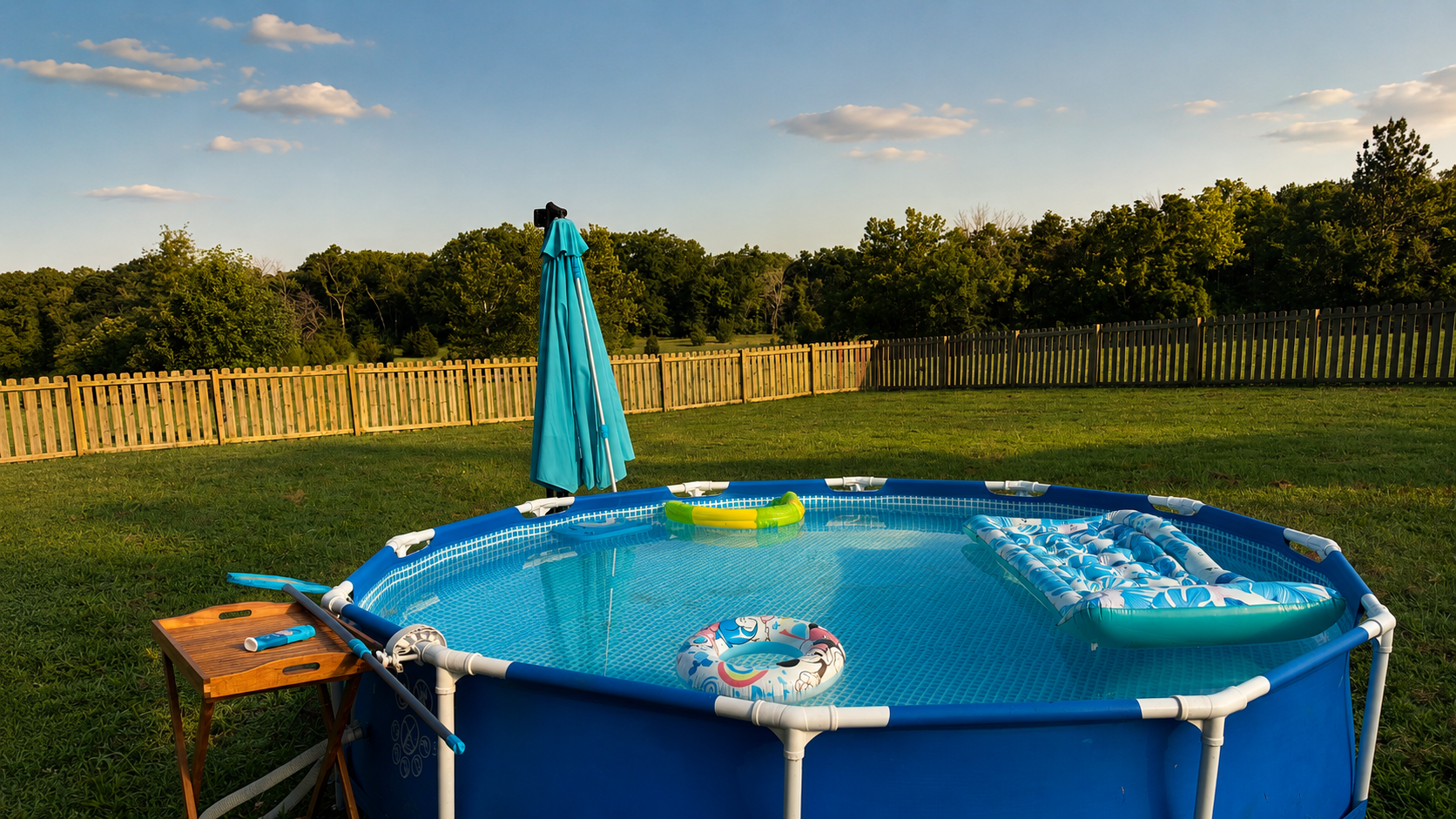
I spent most of the day setting up our backyard pool. It is a small above-ground pool that I set up each year. It was hot out. I got too much sun. The pool is up now, hopefully leak free, and maybe I will actually get to enjoy it later today.

I made that pool my quest yesterday.

So much so that by the time my son wanted me to get in, I could not do it. I just did not have it in me. I had pushed and pushed to get it done.

You might be thinking, why didn’t I set the pool up a month and a half ago when most people were setting up their pools?

Because I cannot stand unfinished projects.

I knew that if I started it, I had too much going on and would not be able to finish it. So I avoided starting it at all. That is exactly the problem I am writing about. I need to be okay with making progress. It does not have to be all or nothing.

We might have been swimming for weeks now, but instead I chose to work on other unfinished things in hopes of getting them done. The funny thing is, they are all still in progress too.

And the reality is that the pool is in progress until I tear it down at the end of the season anyway. There will be maintenance. Water levels. Chemicals. Leaks to patch. Inflatables to inflate. Things to check. Things to fix.

That is the part I keep having to relearn.

These truths are true no matter the situation and no matter the stakes.

True in a garden.
True with old machines.
True with kids.
True with software.
And really, true with most things worth building.

The hard part is rhythm.

A rhythm is different from a perfect schedule. A schedule assumes the day will behave. A rhythm assumes it probably will not. A rhythm gives you a way back in.

Miss a day, come back. Get interrupted, pick up the thread. Make a little progress, then let it compound. Stop pretending every unfinished thing is proof that you are behind.

I do not have this mastered. Not even close. But I can feel the shape of it becoming more important.

I do not want a life where every good thing depends on one heroic sprint after another. I want a life where the important things keep moving, even when the week is messy.

That is what I am trying to build right now.

A business that keeps moving.
A family rhythm that keeps moving.
Projects that keep moving.
Old ideas that still have life in them.
New ideas that need patience.
Systems that can survive imperfect weeks.

Maybe that is the work.

Not finishing everything.

Keeping the right things moving.

After the Fireworks

I meant to write this before the weekend.

That was the plan, anyway. Sunday is supposed to be blog day. I had the idea. I had the theme. I had the intention.

Then life happened. Good life, but life.

On Saturday we hosted a party for the 250th birthday of the United States. It was spectacular. Friends came over. People pitched in. There was food, setup, decorating, cooking, cleaning, kids running around, conversation, and one of those nights where the work fades into the background for a little while and you just get to be grateful that everyone is there.

And the fireworks were great.

There is something about fireworks that still gets me. You know they are planned. You know someone bought them, set them up, thought through the timing, watched the conditions, and made sure everyone was standing far enough back. But when they go off, you stop thinking about all that for a moment.

You just look up.

That feels about right for the 250th birthday of the country too.

Freedom can become an abstract word if we are not careful. It is easy to turn it into slogans or arguments or the kind of thing people only talk about when they are already mad.

But freedom is also very practical.

It is the ability to gather with friends in your own yard. To cook food. To let kids run around. To build a life. To disagree and still share a table. To work hard for something that is not required, but is worth doing anyway.

A good party does not happen by accident. Neither does a good life. Neither does a free country.

There is the visible part everyone remembers. The lights. The food. The music. The laughter. The fireworks.

Then there is the part underneath.

The planning. The mowing. The hauling. The setup. The dishes. The trash. The things that have to be moved, fixed, carried, cleaned, and checked before anyone arrives. There are the real challenges of storms blowing through and power going out just hours before the party starts.

And then there is the morning after.

That might have been the part that stuck with me most this year. Not because cleanup is glamorous, because it is not. But because a few people came back and helped us clean up. Friends pitched in before, during, and after.

That is a small thing, but it is not a small thing.

A lot of what matters in life is held together that way. Not by one person doing everything. Not by the big speech or the big show. But by people noticing what needs to be done and doing some of it.

That is easy to miss if you only look at the fireworks.

The older I get, the more I appreciate the work behind the moment. The patience behind the celebration. The maintenance behind the freedom. The cleanup after the party, even if the sun beat down and fatigue set in.

Maybe that is why posting this late does not bother me as much as it might have a few years ago.

Before the weekend, this would have been a post about anticipation. About what the 250th meant before the fireworks went up.

After the weekend, it feels more honest.

The lesson was not just in the celebration.

It was in the setup.

It was in the people who helped.

It was in the cleanup.

It was in the reminder that the things worth celebrating usually require the most care after the big moment passes.

And maybe that is a pretty good lesson for a country turning 250.

Freedom is not only something we inherit. It is something we keep making room for, keep cleaning up after, keep choosing to protect, and keep practicing in ordinary ways with ordinary people.

Saturday night was spectacular.

Sunday morning was quieter.

Both mattered.