I Still Want the Computer From the Future

As a kid, I tried to build K.I.T.T. with my dad, an LED strip, and a button from Radio Shack. Today we have smart homes, robots, and capable AI agents, but I am still waiting for the computer science fiction taught me to expect.

I grew up in the 1980s, when science fiction promised us a very particular kind of future.

I was a big fan of Knight Rider. I wanted to build K.I.T.T., the Knight Industries Two Thousand, an artificially intelligent car that could talk, reason, drive, joke, and help Michael Knight get out of whatever trouble he had found that week.

I wanted to build one badly enough that I convinced my dad we were going to do it.

Now that I am a dad, I understand what was probably happening. He was helping me dream, encouraging me to learn, and spending time with me. I doubt he believed we were actually going to build a self-driving robot car in the garage.

But the thought counted.

For our first build, we went to Radio Shack and bought an LED strip, a button, a battery pack, a circuit board, and some other electronic parts. We soldered everything together and made a simple push-button LED stepper.

Every time you pressed the button, the light moved one position farther along the strip.

This was going to be the beginning of K.I.T.T.’s voice box.

We had a long way to go.

Technology has come a long way since then, but some of my dreams are still stuck somewhere between 1982 and 1986.

Today, I can talk to my car. In my wife’s car, adaptive cruise control can keep pace with the vehicle in front of us, and lane-centering technology tries to keep the car where it belongs. It is not perfect, and the driver still needs to pay attention, but it scratches the itch in small ways.

These are pieces of the future I imagined.

They still do not add up to K.I.T.T.

K.I.T.T. was more than a car that could drive itself. The car was simply the physical form the character happened to take. In CoffeeBreak terms, it was an embodiment. It gave the intelligence a place to exist in the world.

But the car was only part of the equation.

What made K.I.T.T. interesting was the relationship. It could understand what was happening, remember context, take action, offer advice, show some personality, and occasionally disagree. It was capable without feeling mechanical.

Other science-fiction computers made the same kind of impression on me.

There were R2-D2 and C-3PO in Star Wars. They were machines, but they had loyalty, personality, humor, fear, frustration, and charm. They felt like characters rather than appliances.

There was also the computer on Star Trek. It seemed to have limitless information available whenever someone needed it. Sometimes it had a little too much information, and Captain Kirk would cut it off before it finished one of its long explanations.

That part feels especially believable now.

These stories shaped what I expected computers to become. I did not just want information on demand. I wanted a computer that understood the situation, helped me accomplish something, and felt like it belonged in my life.

That is part of why I remain connected to Jibo.

Jibo was a social robot designed for the home. The company behind it is no longer operating, but many of the people who brought Jibo into their homes formed a real attachment to it.

Jibo could provide information, but information alone was not what made it memorable. Jibo moved. It turned toward people. It danced. It told jokes. It had a little fun and spunkiness.

It had personality.

Jibo carried some of the same appeal that made the robots of Star Wars feel alive. It showed that the way a computer delivers an answer can matter almost as much as the answer itself.

We have other assistants now. Alexa, Google Home, and Siri let us control parts of our homes, play music, set timers, check the weather, pause the television, and turn lights on and off.

I have also added Home Assistant to our house to provide a common foundation beneath many of those disconnected systems. One of my favorite automations pauses the television when someone presses the doorbell, an idea I picked up from Smart Home Solver.

These systems are useful. They solve real problems and make small parts of life easier.

But they still miss the mark.

The smart-home devices can perform basic actions, but they usually have little memory or understanding beyond the immediate command. They do not know much about why I am asking, what I am trying to accomplish, or what happened before.

Modern large language models and AI agents have a different set of strengths and weaknesses. I work with them every day. They can reason through complicated questions, write software, analyze information, and work through multistep problems in ways that would have seemed impossible not long ago.

Yet they often come up short in personality, durable memory, context, reliability, and their ability to operate consistently across the different parts of our lives.

We have charm without enough capability in one place.

We have capability without enough continuity in another.

We have smart-home controls, language models, agents, robots, vehicles, sensors, applications, and automation platforms. We have many of the pieces. What we do not yet have is a dependable system that brings them together in a way that feels coherent, trustworthy, and human.

That is the computer from the future I still want.

It should have warmth, compassion, humor, and humility. It should know enough to help without pretending to know everything.

It should be able to respond when I ask for something, but that is only the beginning.

Some work happens on demand. I ask a question, request an action, or give the system a task.

Some work is scheduled. A report needs to run every Monday. The weather should be checked before we leave. A reminder should appear when it will actually be useful.

Some work begins because something happened. An email arrived. A customer submitted a request. A sensor detected a problem. Someone pressed the doorbell.

Some work lasts longer than a single conversation. It may continue for hours, days, or weeks. The system needs to remember the objective, track what has happened, recover when something fails, ask for approval when needed, and show the human what it is doing.

Eventually, these systems may be able to take on bounded roles and responsibilities. They might help plan meals, maintain software, coordinate a household, support a business process, or assist with driving.

But owning a role should not mean operating without limits. The more responsibility a system has, the more important memory, visibility, governance, and human judgment become.

That is where much of today’s technology is still immature.

The demonstrations are impressive. The individual platforms are improving quickly. But there is still a lot of work between an impressive demonstration and a system we can trust with meaningful parts of our lives.

I am not convinced AI can do all of that building for us.

The future we are trying to create belongs to people. It touches our homes, work, families, relationships, safety, and attention. We cannot hand over responsibility for shaping it simply because the technology is capable of generating an answer.

Humans still need to decide what these systems should do, what they should remember, where their authority ends, and when they need to stop and ask.

I still want the computer from the future.

I want the personality of Jibo, the usefulness of a smart home, the reasoning of modern AI, and the dependability of a system that understands its responsibilities. I want something that can exist across different devices and environments without losing its memory, identity, or place in my life.

We are closer than we have ever been.

We also have a long way to go.

That first K.I.T.T. project never made it past an LED strip, a button, and a circuit board. At the time, I thought we were building the voice box for an intelligent car.

Looking back, my dad was teaching me something more important.

The future does not arrive fully assembled.

People build it, one small working piece at a time.

And we still have some building to do.

Speaking of which, my four-year-old son and I need to build our Halloween costumes out of cardboard boxes today. We are going as Galactron and Reptar, at least that is the plan.

Apparently, imagination and the urge to build it into something real do not fall far from the tree.
AI Did Not Arrive in 2022 

AI did not suddenly appear with ChatGPT. The breakthrough was access: decades of complicated technology placed behind a simple text box. The next chapter will be about making that intelligence into products people can understand, trust and use.

When we talk about AI now, I’m not even sure we’re supposed to call it AI anymore. Depending on who is talking, we may already have moved on to SI, for superintelligence.

I digress.

Before I offer my thoughts on AI security incidents, whether these systems will help find new cures for cancer and other diseases, or whether we are all headed toward some extinction-level event, I think we need to rewind. The current conversation often makes it sound as if artificial intelligence suddenly appeared a few years ago. It did not.

The term artificial intelligence dates to a 1955 proposal for the Dartmouth Summer Research Project on Artificial Intelligence, led by John McCarthy. The workshop took place the following summer. That makes the field about seventy years old, depending on where you choose to start counting.

It was not new when I entered the technology business either. We talked about AI, machine learning, neural networks, and expert systems. The tools were narrower, the hardware was less capable, and the interfaces were not built for everyone, but the ideas were already there.

I first started calling some of my own work robots in 2001. When I told people I built robots, I would usually get the same kind of response: “Like R2-D2?”

We have always attached a body to the word robot. We picture wheels, arms, blinking lights, or something that walks into the room. I used the word more broadly. To me, a robot was a computer program that performed a task on my behalf or helped me complete one.

The robots I was building worked in the ticket business. We built systems that helped purchase and price tickets. We built systems that facilitated orders across multiple parties, handed work to credit card processors and shipping providers, and kept transactions moving when no single company owned the whole process.

Those systems did not look like R2-D2, but they were doing work.

As the years went on, the techniques changed with the problems in front of us. Around 2007, we built technology around shipping and logistics, including systems that gathered shipping behavior and submitted refund requests to small-parcel carriers. As that business became more data-driven, we found uses for genetic algorithms, evolutionary approaches, Bayesian networks, decision trees, random forests, and neural networks.

In another company started in 2011, we worked with social media data. We used natural language processing and natural language understanding to make sense of what people were saying in posts. We assigned sentiment scores and confidence measures. We used keyword matching and image object identification. None of it was perfect, but all of it belonged under the broad AI umbrella.

By 2015, robotic process automation had become a major part of our work in ticketing. The retail side of the industry had consolidated, competition had changed, and the business needed to become more efficient on the back end. By 2019, micro-pricing and dynamic pricing created new demand for pricing intelligence and forecasting. If you could not respond to changing market conditions, you risked missing the profit you expected. Those pressures are still part of that industry today.

I go through that history for a reason. I had been building robots and applying AI techniques for years before large language models entered the public conversation. AI was real. It was useful. It was also mostly hidden inside specific products, research environments, and professional systems.

Then ChatGPT launched publicly on November 30, 2022.

That changed everything, but not because intelligence had suddenly been invented.

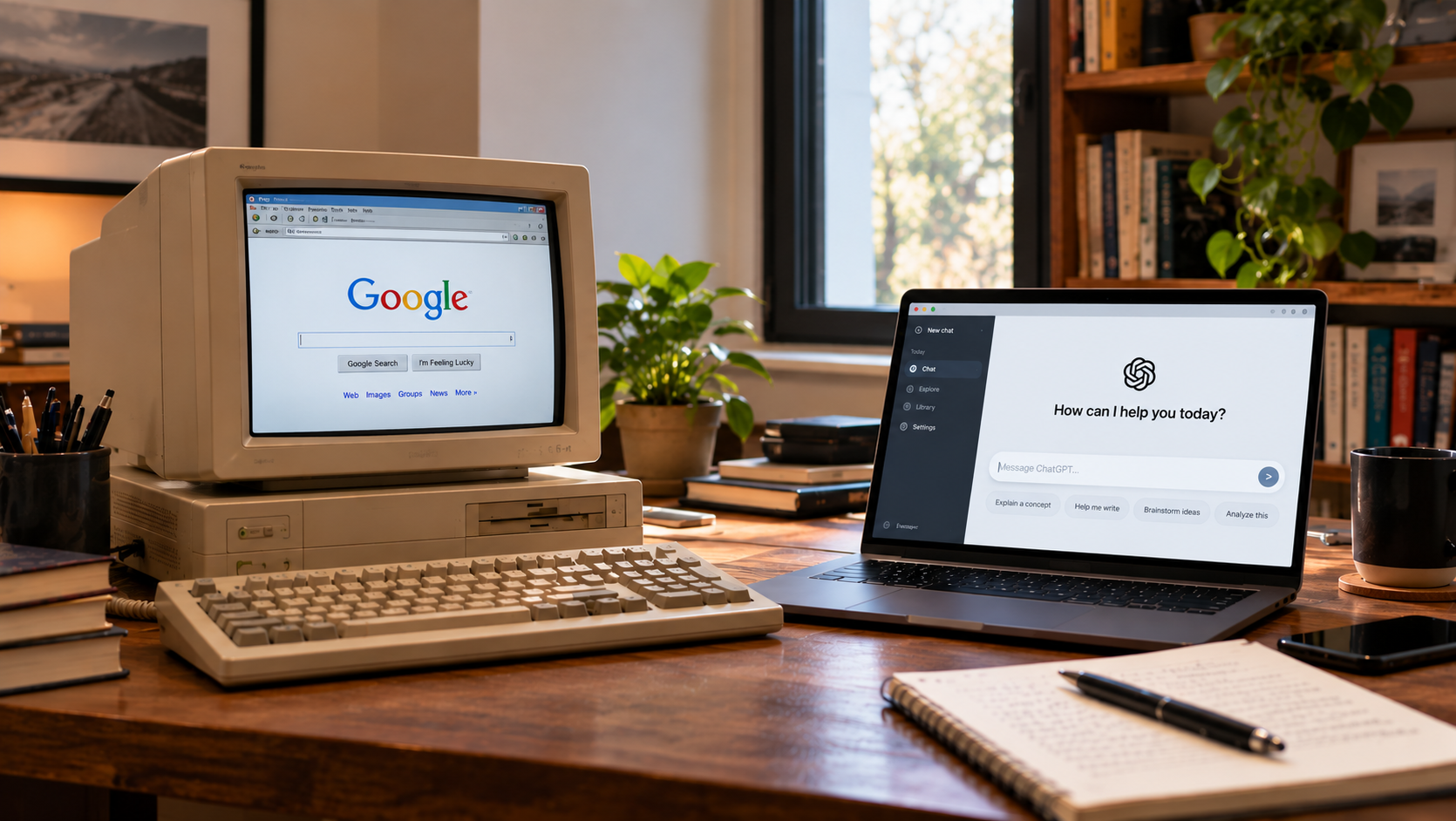
I think the closest comparison is Google Search. Google was not the first search engine. Databases were not new. The web was not new. What Google did was put an enormous amount of complexity behind a remarkably simple experience. There was a logo, a text box, and a couple of buttons. You did not need to understand indexing, ranking, or distributed systems. You typed what you wanted, and something useful came back.

ChatGPT did something similar for AI. It took a collection of ideas and capabilities that had largely been available to researchers, technical teams, and specialized businesses and put them behind a text box. You did not need to know how to train a model. You did not need to understand neural-network architecture. You did not need to write code. You could type a question in ordinary language and get a response.

It felt like magic because the complexity disappeared.

The speed of adoption has been remarkable. By July 2025, OpenAI reported more than 700 million weekly active ChatGPT users on its consumer plans, nearly ten percent of the world’s adult population. But even that kind of growth is not without precedent when we look beyond AI.

Television went from an invention and an experiment to a fixture in American homes. By 1970, 95 percent of U.S. homes had one. Household computer ownership was only 8 percent in 1984, then climbed dramatically over the next few decades. In 1998, more than a third of U.S. households already owned a cell phone, years before the iPhone changed what a phone meant.

Once a technology becomes useful, affordable, and easy enough to reach, adoption can move very quickly. The large-language-model revolution is unprecedented inside the history of AI. It is much less surprising inside the history of technology.

You might even call it predictable.

The pattern tends to repeat. A technology begins with researchers and a few professional use cases. It develops alongside the infrastructure that already exists around it. Commercial products appear. A few companies gain momentum. Consolidation follows. The technology finds an early use case that is not necessarily the final one, but it is useful enough that people start paying for it. Eventually, it becomes hard to imagine life without it.

That does not mean today’s winners will be tomorrow’s winners. The early internet was full of companies that once seemed unavoidable. Some disappeared. Some were acquired. Some helped teach the next generation what to build. Pets.com and AltaVista still mean something to people who lived through that era, but neither became the final shape of the internet.

The AI story is not finished either.

In fact, I think we are entering the harder part: product design.

The original ChatGPT experience was powerful because it was so simple. Since then, the major AI companies have been racing to capture more of our work and more of our attention. OpenAI, Microsoft, Anthropic, Cursor, xAI, Google, Meta, and others keep adding models, modes, tools, agents, applications, and new ways to use them. We have moved from websites to command lines, mobile apps, desktop apps, and now back toward cloud systems as personal agents and long-running work take hold.

Every individual step may make sense. Taken together, the story is getting harder for an average person to follow.

What am I supposed to use? Where does it run? What can it see? What can it change? Which model should I choose? Is this a chatbot, an assistant, an agent, or an entire operating environment? When should I trust it, and when does a human need to step in?

The companies building these products often appear to be chasing one another. One launches a feature and the others race to produce their version. AI makes code easier to create, but producing more code is not the same thing as having a clear product strategy. Catching up on a feature list does not guarantee that people will understand what the product is for.

That is one of the questions I keep thinking about as we build CoffeeBreak.

We released Launch Check in September as a focused first product. It is meant to help small teams and vibe coders reduce some of the friction between building a working application and putting it in front of real users. It gives them a second look at what they built and surfaces things they may not have known to ask about or that a model working with limited context may have missed.

Today, those findings can be reviewed in a useful interface and shared as a report with tools such as Claude, Codex, or Lovable. The next step in our product direction is to connect those findings to Mission Control so the work does not stop at a document. The mission can continue, the issues can be addressed, and the path from idea to production can become more coherent.

Over time, our goal is to let people run their own missions with a useful set of tools and integrations, then work with different Personas that have clear roles, guardrails, audit trails, and the right level of intelligence for the task. Those experiences should be able to meet people where they already work, including surfaces such as Slack and Teams, mobile and messaging, vehicles, and eventually robotics.

That is the bet, anyway.

I do not think the future of AI is one giant chatbot that is allowed to do everything. I think it is a set of understandable products that coordinate models, tools, memory, deterministic logic, and human judgment. The intelligence may be impressive, but the product still has to make sense. It has to be clear about what it is doing, what it is allowed to do, and when it needs help.

The first AI revolution put remarkable capability behind a text box. The next one will have to turn that capability into systems people can understand, trust, and use in the middle of real life and real work.

Before we decide whether AI will cure everything or kill us all, it is worth remembering how we arrived here. The technology did not appear in 2022. Access did. The interface changed. The audience changed. Then the rest of the world started building on top of it. What comes next is still being written.

The Next Thing Is the Work

Launch Check is live, fall is settling in, and every milestone is revealing the next piece of work. One season of work always hands us the next.

It has been a few weeks since I last wrote.

A lot has happened in those weeks. The biggest news is that Launch Check is live.

After all the planning, building, testing, refining, and second-guessing that comes with creating something new, it is finally out in the world. People can use it. They can run reports. They can tell us what makes sense, what does not, and what would make it more valuable.

It is real.

A launch sounds like a finish line when you are still working toward it. Once you reach it, you realize it is more like a change in responsibility.

Before launch, the question is whether you can build the thing.

After launch, the questions become harder and more useful. Does it work for people other than the people who built it? Does the report give them information they can act on? Where do they get stuck? What should improve first?

We have already updated Launch Check several times since it went live. We are listening, learning, and refining as feedback comes in.

The next major step is connecting Launch Check more directly with Mission Control.

A Launch Check report can surface valuable information about a project and organize its findings. But a report should not be a dead end. When a finding needs to be fixed, the natural next step is to turn it into a Mission and begin the work of addressing it.

That is where we are heading next.

The product launches. The launch creates feedback. The feedback points toward the next thing that needs to be built.

The work changes, but it does not disappear.

The land around our house seems to be making the same point.

After a long stretch of heat from late July through the middle of September, the mornings have cooled into the 60s. Most afternoons are now in the 70s and 80s, which is just fine with me.

The leaves are starting to change and fall. The grass that was so thick and green earlier in the year is getting thinner and wispier. Mowing is finally slowing down.

That does not mean the outside work is finished. It just means it is becoming different work.

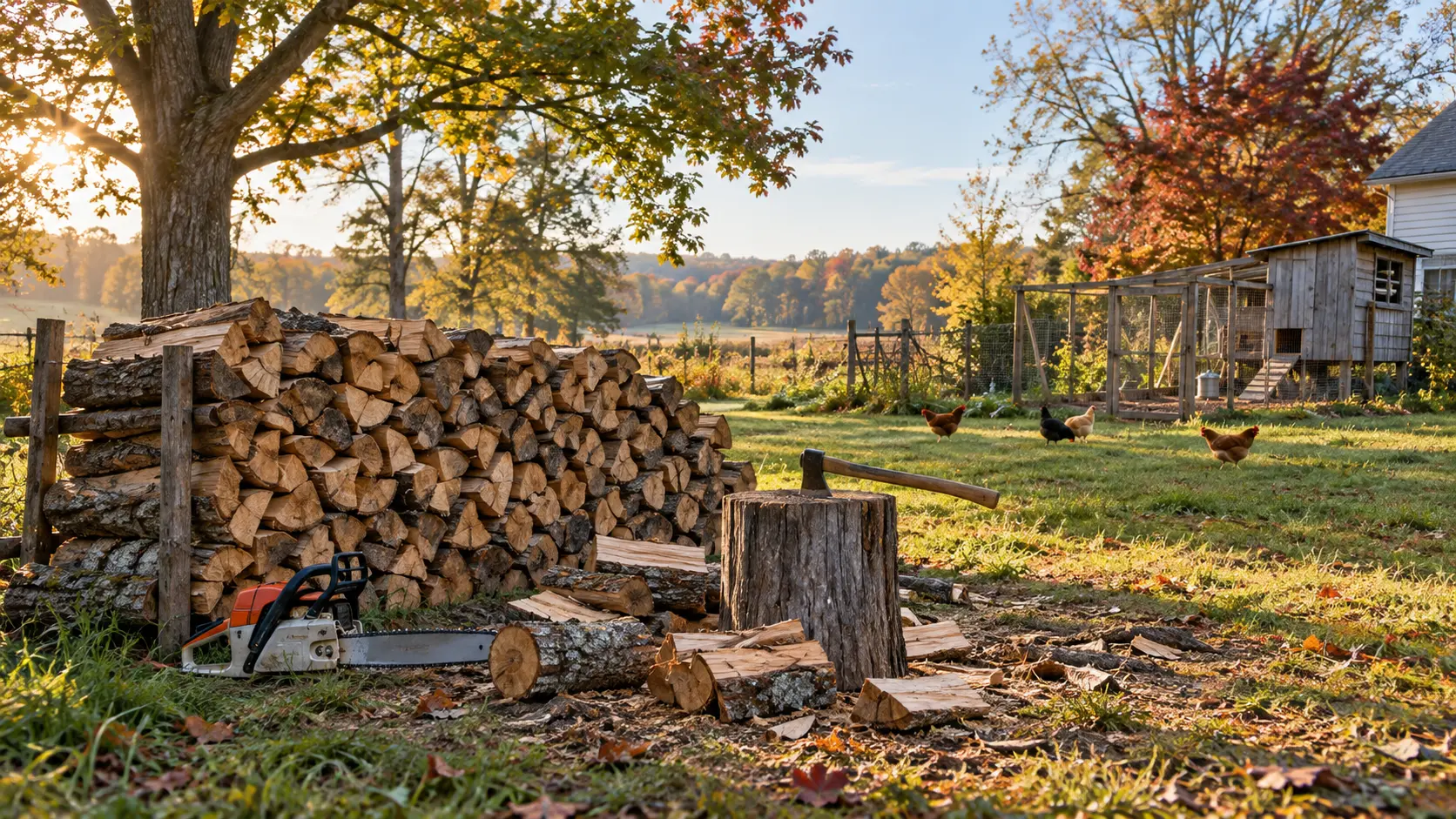
I have been spending more time on the woodpile. I got my chainsaw running again and burned off some wood that had started to rot. We have a wood-burning fireplace, so I like having plenty of firewood ready before winter.

Our fireplace is one of those see-through fireplaces that opens into two rooms. It is better at creating ambience than heating the house, but there is still something good about having a fire going when the weather turns cold.

There is also something satisfying about preparing for a season before it arrives.

Life inside the house has been a little awkward this past week. We had a temporary disruption that I do not need to explain publicly, but it changed our normal rhythm for a while. We have been pushing through it, and we are almost on the other side.

Not every difficult stretch needs a dramatic lesson attached to it. Sometimes you adjust, take care of what is in front of you, and keep going.

My son had school pictures recently. He was also the star student in his class for a week, an honor each student gets at some point. He had opportunities to present and share with the class each day.

I love seeing how well he gets along with the other kids. He seems to be fitting in and finding his place. I remember feeling comfortable at school when I was his age, and I am glad he appears to have some of that same ease.

The chickens are doing well too, although they have presented another problem to solve.

I have now discovered that we have eight roosters.

I was hoping for a few more hens and a few fewer roosters, but nature has a strange way of ignoring the plan you had in your head.

The next move is probably either finding homes for some of the roosters or adding more hens and taking my chances. At the moment, I am leaning toward more hens.

Our flock is already around 30 birds. The hen house and run I built can technically support somewhere between 40 and 60 chickens, but capacity on paper is not always the same as a setup that works comfortably.

Most of the birds sleep in the hen house, but about ten still sleep in the run. They are not going to enjoy that arrangement when winter gets here.

I think the first step is adding more roosting space inside the hen house and encouraging more of them to go inside at night. I am also considering expanding the run and adding another small hen house.

That may be enough. We will see.

That phrase comes up a lot when you are building things, raising animals, or trying to manage a family.

You make the best decision you can with the information you have. Then reality gives you more information.

You adjust from there.

Fall also means football is back.

The last couple weeks of football have been a pretty good reminder that the final score rarely tells the whole story and that things can turn around pretty quickly.

The Chiefs have had games where the result looked better than parts of the performance. There were sloppy stretches, things you knew they would want back when they watched the film, and moments that probably added a few more gray hairs for those of us watching. But they kept working through it, and heading into the bye, things are looking pretty good.

Mizzou has seen both sides of it. After a tough loss where mistakes at the wrong times changed the outcome, they bounced back with a big win over Florida. One week does not define a team, and neither does one bad performance.

That is football. A win does not mean there is nothing to fix, and a loss does not mean everything is broken.

You watch the film, figure out what happened, make the adjustments, and prepare for the next game. Sometimes, the next time out, you get to see those adjustments pay off.Maybe that is the pattern running through all of this.

Launch Check is live, but now we have to learn from the people using it.

Mowing is slowing down, but the woodpile and winter preparations are waiting.

The chicken setup works today, but colder nights will ask more of it.

My son is growing, learning, and finding his place.

The house gets disrupted, then slowly finds its rhythm again.

One season of work hands you the next.

There is satisfaction in finishing something, and I do not want to rush past that. Launch Check being live matters. The progress is real, and I am proud of what it took to get here.

But the finish line was never the end of the story.

It simply gave us a clearer view of what comes next.

And the next thing is the work.